
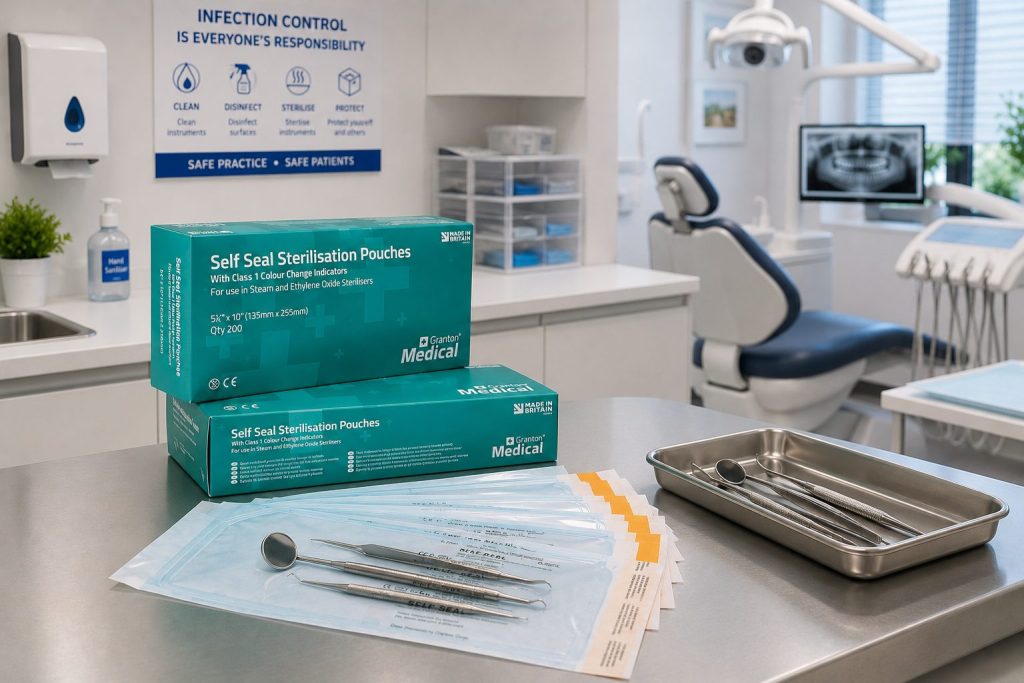
The Role of Sterilisation Pouches in Dental Compliance
Maintaining high hygiene standards is essential in every dental clinic. From routine check-ups to more advanced procedures, dental instruments must be properly cleaned, sterilised and stored to help protect both patients and staff.
Sterilisation pouches provide a protective barrier for appropriately processed instruments when the pouch, sealing method, steriliser cycle and storage conditions are suitable. They form one part of a documented decontamination process.
This guide explains packaging choices for dental practices, including when instruments are pouched and the checks needed before use. The England-specific dental guidance cited below should be read alongside the manufacturers’ instructions and your practice procedures.
What Are Sterilisation Pouches?
Sterilisation pouches are purpose-designed packaging used to protect instruments during an appropriate sterilisation process and subsequent storage, or for a separate post-wrapping strategy where applicable.
For a validated wrapped-load cycle, instruments are cleaned, inspected and dried before being pouched and sterilised. Type N sterilisers are not used for pre-wrapped loads; HTM 01-05 describes a separate aseptic post-wrapping approach for instruments processed unwrapped.
Self-seal sterilisation pouches are commonly used in dental environments because they provide a simple and efficient sealing solution without the need for additional heat sealing equipment.
Why Sterilisation Pouches Matter in Dental Clinics
The timing of packaging depends on the steriliser and the validated process. Do not assume that all instruments should be pouched after sterilisation or that every autoclave can process a sealed pouch.
Sterilisation pouches help:
- Maintain instrument sterility
- Support organised workflows
- Improve instrument handling
- Reduce contamination risks
- Improve patient confidence
After an acceptable cycle and the required release checks, store packaged instruments as instructed, protecting the pack from moisture, damage and contamination. Check pack integrity and the applicable use-by or reprocessing date before use.
Supporting Infection Control Procedures
Infection control involves more than simply sterilising instruments. Instruments must also be transported, stored and handled correctly after sterilisation.
Instruments should move through a dirty-to-clean workflow, with used items kept separate from cleaned and processed instruments. Depending on the validated method and instrument instructions, a dental decontamination area may include:
- Ultrasonic cleaners
- Class B autoclaves
- Instrument trays
- Medical trolleys
- Distilled water systems
For dental practices in England, HTM 01-05 decontamination guidance explains workflow separation and packaging strategies. Follow the instructions for the instruments, packaging and steriliser used in your practice.
Sterilisation Pouches and Compliance
Dental clinics are expected to follow strict hygiene and sterilisation procedures. Properly packaged instruments can help demonstrate that sterilisation processes are organised and consistently managed.
A pouch’s chemical process indicator changes in response to specified processing conditions. A colour change alone does not prove that the contents are sterile. Interpret it alongside the cycle record and the checks required by your validated process and manufacturers’ instructions. The CDC explanation of chemical indicators describes this distinction.
Packaging checks should sit alongside cycle records, equipment testing, validation and maintenance. Our guide to autoclave cycle records and traceability explains how records support investigation and load identification.
Self-Seal vs Heat-Seal Pouches
Self-seal pouches use an adhesive closure, while heat-seal pouches require a suitable heat sealer. Either method needs to be compatible with the intended process and used according to its instructions.
Practical features of self-seal pouches include:
- An adhesive closure applied by the user
- No heat sealer required
- Easy storage
- A closure that must be formed and checked as instructed
- Suitable for busy clinics
Choose the sealing method for the validated packaging system and the practice workflow. A pouch being self-seal does not remove the need to check the closure, pack condition and cycle compatibility.
Choosing the Right Sterilisation Pouch
The correct pouch size is important for maintaining effective sterilisation.
Choose a pouch size that accommodates the instruments without overcrowding or stressing the seal. Follow the pouch and steriliser instructions for loading, orientation and spacing.
Check that the pouch is intended for the sterilisation method, temperature and load you will use. Confirm compatibility with the packaging supplier and steriliser manufacturer if the instructions are unclear.
You can view our range of self-seal sterilisation pouches suitable for dental and clinical environments.
Common Mistakes Clinics Should Avoid
Some common issues with sterilisation pouch usage include:
- Using damaged pouches
- Overloading pouches with instruments
- Incorrect sealing
- Storing pouches in unsuitable environments
- Using the wrong pouch size
Small mistakes can affect the overall sterilisation process and increase contamination risks.
For storage and pack-condition checks, read how long instruments stay sterile in self-seal pouches. Follow the storage procedure applicable to your practice rather than assuming that every sealed pouch has the same shelf life.
Patient Confidence and Professional Standards
Opening an intact instrument pack at the appropriate point can help explain the practice’s decontamination procedures to a patient. Appearance alone does not establish that an instrument has been correctly processed.
Well-organised sterilisation processes also create a more professional and efficient clinical environment.
Conclusion
Sterilisation pouches support dental instrument storage when the packaging, sealing and sterilisation process are compatible and correctly used.
They do not replace effective cleaning, cycle monitoring, equipment testing, staff training or documented procedures. Review the whole process with the person responsible for decontamination in your practice.
For busy dental practices, self-seal sterilisation pouches remain a practical and efficient part of everyday sterilisation management.
FAQs
What are sterilisation pouches used for?
They protect appropriately prepared instruments during a compatible wrapped-load sterilisation cycle and storage. A separate post-wrapping strategy may apply after an unwrapped type N cycle; follow the applicable guidance and equipment instructions.
Why are sterilisation pouches important in dental clinics?
Suitable packaging helps protect processed instruments from recontamination during handling and storage, provided the pack remains intact and the validated procedure is followed.
What is the difference between self-seal and heat-seal pouches?
Self-seal pouches have a built-in adhesive strip, while heat-seal pouches require a separate sealing machine.
Can sterilisation pouches be reused?
No, sterilisation pouches are designed for single use only.
Do sterilisation pouches help with compliance?
They can support the packaging and storage part of a compliant process, but using a pouch alone does not demonstrate compliance or prove sterility.