
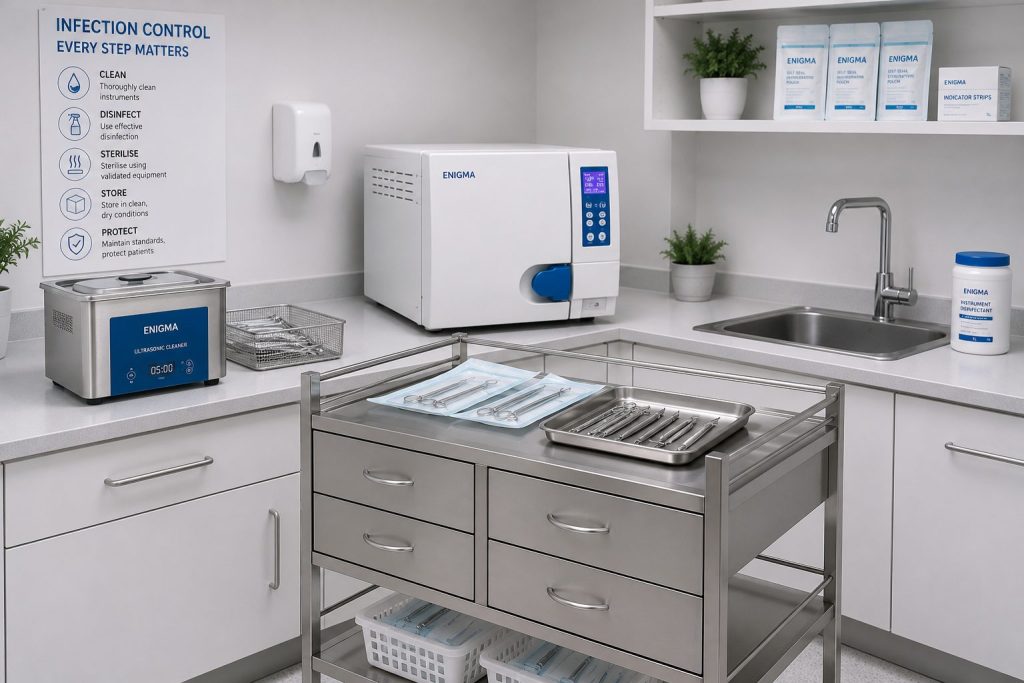
Clinic Infection Control: Workflow, Equipment and Records
Infection control depends on consistent procedures, suitable equipment and staff who understand each stage of instrument handling. This guide focuses on reusable instruments, workflow and records in clinical settings.
Dental practices and other treatment settings have different instruments, risks and applicable guidance. Do not assume that a process suitable for one sector automatically applies to another.
The dental examples below refer to guidance for England. Check the requirements for your sector and nation, the equipment manufacturers’ instructions and your organisation’s infection prevention procedures.
Explaining Infection Control to Patients
A clear explanation of instrument preparation can help patients understand the practice’s procedures. The important question is whether the process is appropriate and consistently followed.
Visible features may include:
- Sealed sterilisation pouches
- Clean treatment areas
- Professional instrument handling
- Modern sterilisation equipment
Visible cleanliness and equipment appearance cannot establish that instruments have completed a suitable decontamination process. Staff training, documented checks and correct handling remain essential.
Infection Control Is About More Than Just Sterilisation
Cleaning removes contamination from instruments before any required sterilisation. An ultrasonic cleaner may be used for suitable instruments as part of the cleaning stage; it does not replace a validated sterilisation process. Select the cleaning method according to the instrument instructions and applicable guidance.
A complete infection control process also includes:
- Correct handling of instruments
- Dirty-to-clean workflows
- Surface disinfection
- Proper storage
- Staff training
- Equipment maintenance
Every stage of the process matters. Even properly sterilised instruments can become contaminated if they are handled or stored incorrectly afterwards.
Cross Contamination Risks Remain a Major Concern
Used instruments, contaminated surfaces and poorly separated work areas can create opportunities for cross-contamination. A documented process should keep contaminated items away from cleaned and processed instruments.
Common causes include:
- Improper instrument transport
- Cluttered sterilisation areas
- Poor separation of clean and contaminated items
- Incorrect pouch usage
- Inadequate cleaning before sterilisation
Creating structured workflows helps reduce these risks and improves consistency across the clinic.
Choosing Equipment for the Instruments You Process
Start with the instrument manufacturer’s reprocessing instructions, the types of loads processed and the practice’s capacity needs. Newer equipment is not automatically suitable for every instrument or procedure.
A Class B steriliser is designed for load types including hollow and packaged items, but the selected cycle must be validated for the intended load. Read why dental clinics use Class B autoclaves for practical compatibility checks.
Depending on the process, supporting equipment and consumables may include:
- Ultrasonic cleaners
- Water-treatment devices
- Medical trolleys
- Sterilisation consumables
- Instrument organisation systems
Select each item for its role in the whole process. Follow the steriliser’s water-quality requirements and the manufacturers’ loading and maintenance instructions.
If you are reviewing your current sterilisation setup, our guide to choosing the best autoclave for a dental clinic may also be useful.
Keep Cycle Records and Equipment Documentation
For dental practices in England, CQC guidance on decontamination equipment describes cycle records, testing, validation and maintenance. The requirements should be built into the practice’s documented procedures.
Follow the manufacturer’s instructions for equipment testing, maintenance and servicing. Servicing and validation have different purposes, and neither replaces the checks required for each cycle.
Define who checks and releases each load, records faults and retains the relevant documentation. Our guide to autoclave cycle records and traceability covers the information a log can contain.
Staff Workflow and Efficiency Matter Too
Good infection control processes can also improve efficiency. Organised sterilisation rooms and properly structured workflows help reduce delays, improve instrument turnaround times and make daily tasks easier for staff.
Keep used instruments separate from cleaned and processed items, and maintain a dirty-to-clean route through the decontamination area. HTM 01-05 guidance for dental practices in England explains this separation; adapt the layout and procedures to the applicable setting.
Check What the Equipment Can Record
When comparing equipment, check the actual model documentation for:
- How cycle data are displayed, printed or exported
- Which instrument and packaging loads each cycle can process
- The complete cycle time for the intended load, including drying where applicable
- The testing and validation documentation required
- Installation, water-supply and space requirements
A feature list does not demonstrate compliance. Confirm how the equipment will be operated, checked and maintained within the practice’s process.
Conclusion
Review the instrument journey from use through cleaning, inspection, packaging where appropriate, sterilisation and protected storage. Identify where contamination could be introduced and who is responsible for each check.
For a closer look at packaging, see sterilisation pouches in dental practice. Pouches need to match the intended cycle and should be checked as part of the documented process.
Use suitable equipment alongside staff training, written procedures and retained records. Seek advice from the person responsible for decontamination when changing a process or selecting equipment for unfamiliar instruments.
FAQs
Why is infection control important in clinics?
Infection control helps reduce the risk of contamination, protects patients and staff, and supports safe treatment environments.
What equipment helps improve infection control?
The equipment depends on the instruments and procedure. Autoclaves provide steam sterilisation for compatible loads; ultrasonic cleaners support the cleaning stage. Packaging, transport and storage arrangements must also suit the process.
Why are Class B autoclaves commonly used?
Class B cycles are designed for load types including hollow and packaged items. Use a cycle validated for the intended load and follow both the instrument and steriliser instructions.
Can poor workflow increase contamination risks?
Yes, cluttered workspaces and poor separation between clean and contaminated items can increase cross contamination risks.
How often should sterilisation equipment be serviced?
Follow the manufacturer’s testing, servicing and maintenance instructions and the applicable guidance for your setting. For dental practices in England, CQC guidance also describes validation at installation and annually thereafter. Servicing does not replace validation or routine cycle checks.