
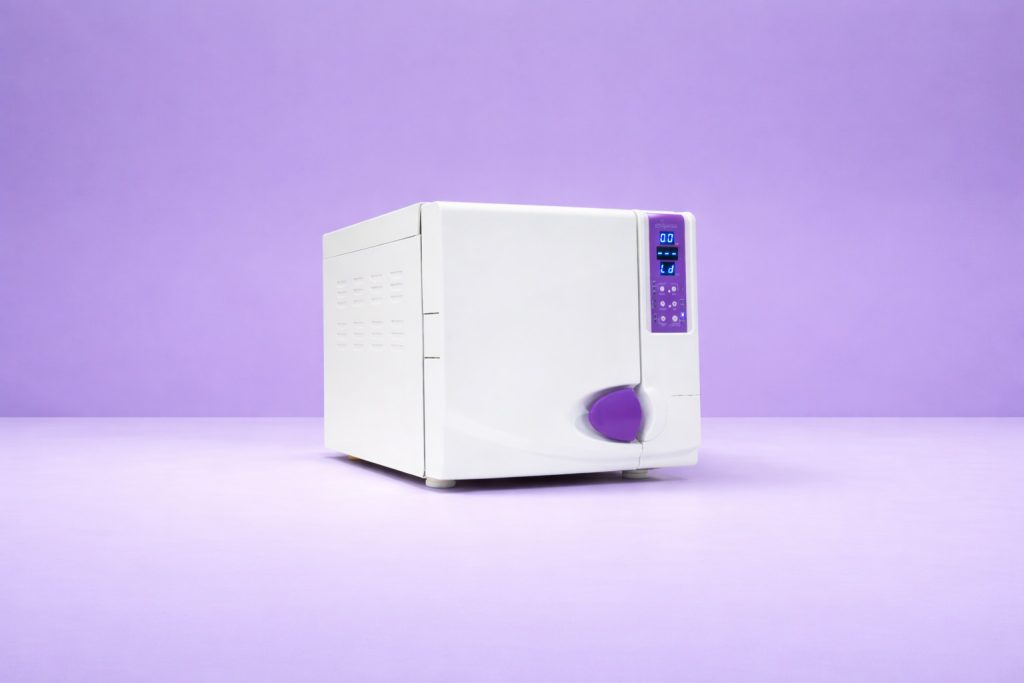
Why Dental Clinics Use Class B Autoclaves
Reusable dental instruments need an appropriate cleaning and sterilisation process before reuse. Single-use items must not be treated as reusable instruments.
Class B steam sterilisers can support practices that process compatible hollow or packaged loads. Suitability depends on the instrument, packaging, chosen cycle and the manufacturers’ instructions, rather than the Class B label alone.
This guide focuses on the practical checks for using a Class B autoclave: matching loads to cycles, preparing instruments and maintaining a documented workflow. It uses dental guidance for England as a reference.
What Is a Class B Autoclave?
A Class B autoclave is a steam steriliser that uses vacuum technology to remove air from the chamber before sterilisation begins.
Removing air helps steam reach the surfaces of compatible hollow and packaged loads. Each cycle must be validated for the load and used according to the steriliser and instrument manufacturers’ instructions.
Class B autoclaves are commonly used in:
- Dental clinics
- Podiatry practices
- Veterinary clinics
- Beauty and aesthetic clinics
- Tattoo studios
The useful distinction is which loads a validated cycle can process. A Class B unit must still be checked for the particular instruments and packaging used by the practice.
Why Dental Clinics Need Reliable Sterilisation
Dental instruments can become contaminated with blood, saliva and other material. Reusable items must be cleaned and inspected before the appropriate sterilisation process; follow the instrument manufacturer’s instructions.
Modern dental clinics often process:
- Handpieces
- Scalers
- Forceps
- Mirrors
- Hollow instruments
- Wrapped instrument packs
Check that each item can tolerate the intended steam process and that it is prepared, loaded and handled as instructed. Instruments that cannot be processed by that cycle need an appropriate alternative route.
The Benefits of Class B Autoclaves for Dental Practices
Suitable for Hollow Instruments
A suitable Class B cycle can process compatible hollow instruments where the steriliser and instrument instructions permit that load.
Dental handpieces may require specific cleaning, lubrication, adapters or loading arrangements. Check both sets of instructions; a vacuum stage alone does not establish that every handpiece can be reprocessed in every Class B cycle.
Compatible with Wrapped Instruments
For a wrapped-load process, clean, inspect and dry the instruments before packaging them as instructed. Check that the pouch and selected cycle are compatible.
After the cycle, carry out the required release checks and check the packaging and drying outcome. Store the instruments according to the applicable instructions; do not assume that sealing a pouch guarantees sterility.
Improved Infection Control
Steam sterilisation is one stage in a validated decontamination process. Correct preparation, loading, cycle monitoring and handling help prevent errors that equipment alone cannot eliminate.
Use the cleaning method specified for the instrument. Ultrasonic cleaning may form part of that stage for compatible items, but it does not sterilise instruments or replace the required steam cycle.
Better Workflow Efficiency
Plan capacity around the loads the practice actually processes. Check the complete cycle time for the intended load, including drying where applicable, and the number of cycles needed each day.
Allow for preparation, cooling and release checks, maintenance and possible downtime. A short advertised cycle should not be assumed suitable for every instrument or packaged load.
Suitable for a Wide Range of Instruments
Depending on the validated cycle and the manufacturers’ instructions, compatible loads can include:
- Solid instruments
- Hollow instruments
- Wrapped instruments
- Unwrapped instruments
Do not assume that every cycle offered by a Class B steriliser accepts every item on this list. Check the cycle/load instructions and any limits on packaging, quantity or instrument geometry.
Class B vs Other Autoclave Types
In HTM 01-05 guidance for dental practices in England, type B uses a vacuum stage for load types including hollow and packaged items; type N is intended for unwrapped solid instruments; and type S is designed for the loads specified by its manufacturer.
Select equipment and cycles for the instruments being processed. Type N must not be used for pre-wrapped loads; type S suitability must be checked against the manufacturer’s defined loads. Age or chamber size alone does not establish suitability.
Clinics looking for guidance on selecting the right sterilisation equipment can also read our article on what is the best autoclave for a dental clinic.
Our guides to sterilisation pouches in dental practice and autoclave cycle records and traceability explain packaging checks and documentation alongside the equipment choice.
Supporting Equipment for Dental Sterilisation
Autoclaves work best as part of a complete sterilisation workflow. Many clinics also use:
- Ultrasonic cleaners
- Sterilisation pouches
- Distilled water systems
- Instrument trays
- Medical trolleys
Maintain a dirty-to-clean workflow, keeping used instruments separate from cleaned and processed items. Organise transport, preparation and storage so that instruments are not recontaminated between stages.
Conclusion
Dental practices may choose Class B autoclaves because suitable validated cycles can process compatible hollow and packaged loads.
The practical task is to match the instruments, packaging and cycle, then follow a documented preparation, checking and storage process.
Use the manufacturers’ instructions and the applicable dental guidance to make that decision. The existing dental autoclave buying guide above covers wider equipment-selection considerations.
FAQs
Why are Class B autoclaves used in dental clinics?
Suitable validated Class B cycles can process compatible hollow and packaged loads. The practice must confirm the instrument, packaging and cycle requirements.
Can Class B autoclaves sterilise dental handpieces?
Only where the handpiece and steriliser instructions confirm compatibility with the selected cycle and specify any preparation or accessories required.
Are Class B autoclaves suitable for wrapped instruments?
Suitable Class B cycles can process compatible wrapped loads. Check the packaging, load limits, drying requirements and both manufacturers’ instructions.
Do dental clinics legally need a Class B autoclave?
Do not make the decision from the Class B label alone. Match the instruments and packaging to a validated process and follow the applicable guidance for the practice. HTM 01-05 distinguishes B, S and N by the loads they are designed to process.
What other equipment is used alongside a dental autoclave?
The supporting equipment depends on the instrument instructions and the practice process. Cleaning equipment, suitable packaging, the specified water supply and protected storage all need to work together.