
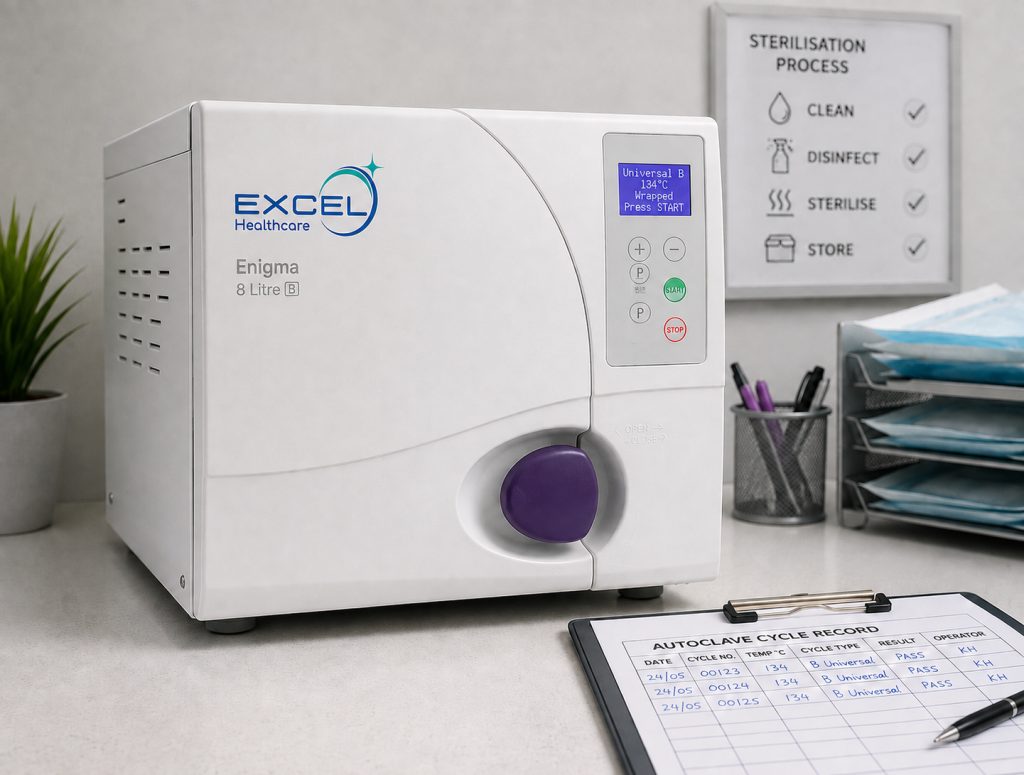
Why Autoclave Cycle Records and Traceability Matter
Sterilising reusable instruments is not simply about running an autoclave cycle and assuming the process has been successful.
Healthcare providers also need appropriate records to demonstrate that instruments have been processed correctly and, where necessary, to trace them back to the decontamination cycle they went through.
Good record keeping supports quality control, infection prevention and accountability. It can also make it much easier to identify affected instruments if a problem is discovered with an autoclave cycle.
In this guide, we look at why autoclave cycle records matter, what traceability means in practice and the type of information clinics should consider recording.
What are autoclave cycle records?
An autoclave cycle record provides evidence of an individual sterilisation cycle and the load processed during it.
Depending on the equipment and the procedures followed by the clinic, this may involve a printed cycle record, digital data stored by the steriliser or information recorded manually in a sterilisation log.
For dental practices, HTM 01-05 includes an example processed log sheet for benchtop autoclaves. The information shown includes the date, cycle number, start time, selected cycle, description of the load, whether the cycle passed, whether the printout was checked and the operator’s initials.
The aim is not simply to generate paperwork. The record provides a way of showing that the sterilisation process was monitored and that the load was only released after an acceptable cycle.
Why are sterilisation records important?
Reusable medical devices pass through several stages before they can safely return to use.
These can include:
- cleaning
- inspection
- packaging
- sterilisation
- storage
- eventual use
Record keeping provides a documented link between these processes and helps demonstrate that the clinic’s decontamination procedures are being followed consistently.
The Health and Social Care Act 2008 Code of Practice states that healthcare organisations should have a record-keeping system that helps ensure decontamination processes are fit for purpose and use the required quality systems.
Records can therefore provide useful evidence during internal checks, equipment servicing, audits or investigations.
What does traceability mean?
Traceability means being able to identify the route an instrument or instrument set has taken through the decontamination process.
In practical terms, this may mean being able to establish:
- which sterilisation cycle processed the instrument
- when the cycle took place
- which autoclave was used
- whether the cycle completed successfully
- who checked or released the load
- where relevant, which patient or procedure the instrument was subsequently associated with
National infection prevention guidance states that a reusable medical device or instrument set should be traceable to the individual process cycle used to decontaminate it, so that the success of that cycle can be verified.
For instruments used in invasive procedures, guidance also highlights the importance of being able to identify individual instruments or consistent instrument sets throughout use and decontamination.
Why cycle traceability matters when something goes wrong
One of the clearest benefits of traceability becomes apparent when a problem is discovered.
Imagine that an autoclave fault is identified during routine testing or servicing.
Without accurate records, it may be difficult to determine:
- when the problem began
- which cycles could have been affected
- which instruments were processed during those cycles
- whether any of those instruments have already been used
With appropriate cycle records, the clinic has a clearer audit trail to work from.
This can help staff identify potentially affected loads and follow the organisation’s procedures for investigating, quarantining or reprocessing instruments where required.
What information should an autoclave log contain?
The exact requirements will depend on the healthcare setting, equipment and applicable guidance, but a useful sterilisation record may include information such as:
- date of the cycle
- cycle or batch number
- autoclave identification
- cycle type or programme selected
- start time
- description of the load
- confirmation that the cycle passed
- printout or electronic cycle data where available
- operator identification or initials
- details of any faults or unusual results
Practices should follow the relevant guidance for their sector along with the autoclave manufacturer’s instructions and their own documented infection prevention procedures.
Do autoclaves automatically record cycles?
Many modern autoclaves can provide some form of cycle documentation, although the exact system varies between models.
Depending on the steriliser, this might include:
- an integrated printer
- electronic data storage
- downloadable cycle records
- USB or digital reporting
- a combination of electronic and manual records
Automatic recording can make the process easier, but staff still need to review the relevant information and follow their local procedure before releasing instruments for use.
A printout or digital record alone does not replace appropriate checks.
What should happen if a cycle fails?
If an autoclave indicates that a sterilisation cycle has failed, the instruments from that load should not simply be assumed to be sterile.
The clinic should follow its documented procedure, which may involve identifying and isolating the affected load, investigating the reason for the failure and reprocessing instruments where appropriate.
This is where good cycle records become particularly valuable.
If each load has been properly documented, it becomes much easier to identify exactly what was processed and prevent questionable instruments from entering normal circulation.
Records also support autoclave maintenance
Cycle records can sometimes reveal patterns that might otherwise be overlooked.
For example, repeated cycle failures, unusual readings or recurring comments from operators could indicate that an autoclave needs further investigation.
Keeping consistent records alongside servicing and validation documentation therefore provides a more complete picture of equipment performance over time.
NHS guidance for decontamination equipment also emphasises documented procedures and records for demonstrating that loads have been processed within the permitted cycle parameters established during validation and performance qualification.
Traceability works best as part of a wider system
Autoclave records are only one part of an effective traceability process.
Good practice may also involve clearly identifying sterilisation pouches, maintaining organised instrument storage and following consistent procedures for handling instruments between decontamination and use.
The goal is to create an audit trail that allows staff to understand what happened to an instrument throughout its journey.
The more consistent the process is, the easier it becomes to investigate an issue if one arises.
Avoid treating record keeping as a paperwork exercise
It can be tempting to see sterilisation logs as another administrative task.
In reality, they provide evidence that an important infection prevention process has taken place and give clinics information they may need if equipment or processing problems are discovered.
Records are most valuable when they are:
- completed consistently
- clear and readable
- linked to the correct cycle or load
- checked when required
- stored according to the organisation’s procedures
Incomplete records can significantly reduce the value of a traceability system.
Good records support safer sterilisation processes
Effective instrument sterilisation depends on more than having the right autoclave.
Equipment needs to be operated correctly, maintained appropriately and supported by procedures that allow clinics to demonstrate that each load has been successfully processed.
Good autoclave cycle records create an important link between the steriliser, the instruments processed and the eventual use of those instruments.
If a problem occurs, that information can help a clinic understand what happened and respond appropriately.
For healthcare providers, traceability should therefore be viewed as an important part of the decontamination process rather than an administrative afterthought.
Autoclaves and sterilisation equipment from Excel Healthcare
Excel Healthcare supplies autoclaves, ultrasonic cleaners, sterilisation pouches and healthcare consumables for dental practices, medical clinics, veterinary practices, podiatrists, beauty and aesthetics clinics and other professional environments.
Having suitable sterilisation equipment is one part of maintaining an effective decontamination process. Correct operation, maintenance, record keeping and traceability all help support consistent standards.
Explore our range of autoclaves and sterilisation equipment or contact Excel Healthcare for help choosing suitable equipment for your practice.