
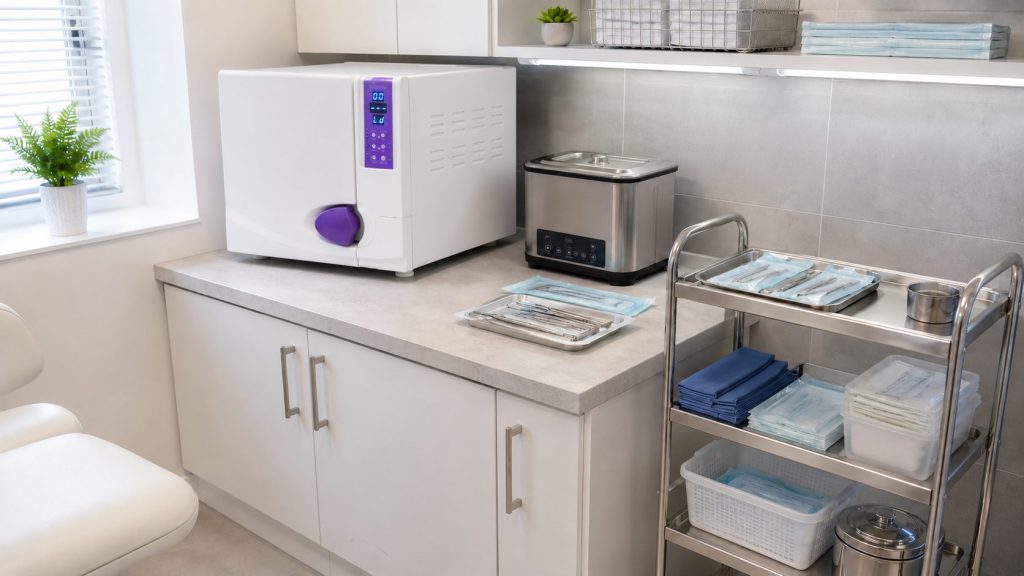
Why Small Clinics Are Choosing Compact Sterilisation Equipment
Smaller dental clinics, podiatry practices, beauty salons, veterinary surgeries and tattoo studios still need reliable sterilisation processes, but they may not have the space available for large decontamination rooms or industrial equipment.
Compact sterilisation equipment offers a practical solution. Smaller autoclaves, tabletop ultrasonic cleaners and space-efficient storage systems can help clinics maintain an organised workflow without taking over the treatment environment.
However, compact equipment should not simply be chosen because it fits the available space. Capacity, instrument type, cycle frequency and compliance requirements must all be considered before selecting the right sterilisation setup.
Why Space Is a Challenge for Smaller Clinics
Many clinics operate from converted commercial units, shared healthcare buildings or compact treatment rooms. In these environments, creating a completely separate sterilisation room may not always be possible.
The available space may need to accommodate:
- Instrument cleaning
- Rinsing and drying
- Inspection and packaging
- Autoclave sterilisation
- Sterile instrument storage
- Consumables and testing products
Choosing appropriately sized equipment can help maintain a clear workflow while leaving enough room for instruments to be handled safely.
What Is Compact Sterilisation Equipment?
Compact sterilisation equipment is designed to provide the functionality required by a clinic while using less worktop or floor space.
Examples include:
- Small tabletop autoclaves
- Compact Class B sterilisers
- Tabletop ultrasonic cleaners
- Narrow medical trolleys
- Wall-mounted storage
- Smaller instrument trays
The aim is not to reduce the standard of sterilisation. It is to select equipment with a capacity and footprint suited to the clinic’s actual workload.
The Benefits of a Compact Autoclave
A compact autoclave can be particularly useful for clinics that process smaller instrument loads throughout the day.
Potential advantages include:
- A smaller worktop footprint
- Faster processing of appropriately sized loads
- Easier installation in compact rooms
- Lower initial cost than some larger models
- Reduced need to run a large chamber for a small number of instruments
Clinics should still make sure the autoclave is suitable for the instruments being processed. Hollow, wrapped and complex instruments may require a Class B autoclave with an appropriate vacuum cycle.
Excel Healthcare supplies a range of Enigma autoclaves in different capacities, allowing clinics to compare models based on their available space and typical instrument volume.
Smaller Does Not Always Mean Better
A compact machine may save space, but choosing a steriliser that is too small can create other problems.
If the chamber cannot accommodate the clinic’s normal workload, staff may need to run additional cycles throughout the day. This can increase processing time, energy use and wear on the equipment.
Before choosing an autoclave, consider:
- How many instruments are used each day
- The size and shape of instrument packs
- How many cycles are normally required
- Whether future growth is expected
- The time available between patient appointments
- Whether a backup steriliser is available
The best machine is not necessarily the smallest one. It is the smallest model that can comfortably and reliably meet the clinic’s needs.
Compact Ultrasonic Cleaners
An ultrasonic cleaner can reduce the amount of manual instrument cleaning required before sterilisation. Compact tabletop units are particularly useful where worktop space is limited.
The tank should still be large enough to hold instruments without overcrowding. Instruments need sufficient space within the basket for the cleaning solution and ultrasonic action to reach their surfaces effectively.
Clinics can view Excel Healthcare’s range of ultrasonic cleaners to compare different sizes and configurations.
An ultrasonic cleaner does not sterilise instruments. After cleaning, instruments must still be rinsed, dried, inspected, packaged where required and processed using an appropriate autoclave cycle.
Creating a Safe Workflow in a Small Space
Even a compact sterilisation area should follow a logical direction from contaminated instruments towards clean and sterilised items.
The layout should minimise the risk of clean instruments coming into contact with contaminated equipment or surfaces.
A practical workflow may include:
- Receiving contaminated instruments
- Pre-cleaning and ultrasonic cleaning
- Rinsing and drying
- Inspection and packaging
- Autoclave sterilisation
- Cooling and storage
Equipment should be positioned so staff can follow this sequence without repeatedly crossing between clean and contaminated areas.
Where decontamination takes place within a treatment room, equipment must also be used in a way that protects patients and avoids unnecessary disruption.
Storage and Mobile Equipment
Compact storage can be just as important as choosing the right steriliser.
Medical trolleys can provide movable storage for instrument trays, sterilisation pouches and consumables. Drawers and shelves help keep supplies organised while allowing the trolley to be moved when additional space is required.
Excel Healthcare supplies medical trolleys for clinical environments, including models with drawers and lower storage shelves.
Sterilised instruments should be stored in clean, dry conditions and protected from unnecessary handling until required.
Servicing Still Matters
Smaller equipment requires the same attention to validation, testing and maintenance as larger sterilisation systems.
Autoclaves and other decontamination equipment should be serviced in line with the manufacturer’s instructions. Cycle records, routine testing and inspections help confirm that equipment continues to perform correctly.
Choosing a compact autoclave with accessible servicing and technical support can help reduce disruption if a fault occurs.
Excel Healthcare provides autoclave service plans to support routine maintenance and help clinics manage their equipment more effectively.
Conclusion
Compact sterilisation equipment can help smaller clinics create an effective decontamination workflow within limited space. Tabletop autoclaves, ultrasonic cleaners and mobile storage solutions can all contribute to a practical and organised setup.
The equipment must still be selected according to instrument types, daily workload and sterilisation requirements. Choosing a machine that is too small may create delays, while choosing equipment that is too large may waste valuable space and capacity.
A carefully planned setup allows smaller clinics to maintain reliable instrument processing without compromising safety, efficiency or infection control.
FAQs
What is the best autoclave for a small clinic?
The best autoclave depends on the number and type of instruments being processed. Clinics should consider chamber capacity, instrument dimensions, cycle type and daily workload rather than choosing solely by physical size.
Do small clinics need a Class B autoclave?
A Class B autoclave may be required where hollow, wrapped or complex instruments are processed. The appropriate machine depends on the instruments used and the manufacturer’s sterilisation instructions.
Can an autoclave be used in a treatment room?
This may be necessary where a separate decontamination room is not available, but the clinic must maintain a safe layout and suitable infection-control procedures.
Are compact ultrasonic cleaners effective?
Yes, provided the unit is appropriate for the instruments and is used correctly. The basket should not be overloaded, and the cleaning solution must be prepared and changed in accordance with the manufacturer’s guidance.
Does compact sterilisation equipment require servicing?
Yes. All decontamination equipment should be tested, maintained, validated and serviced according to the manufacturer’s recommendations.