
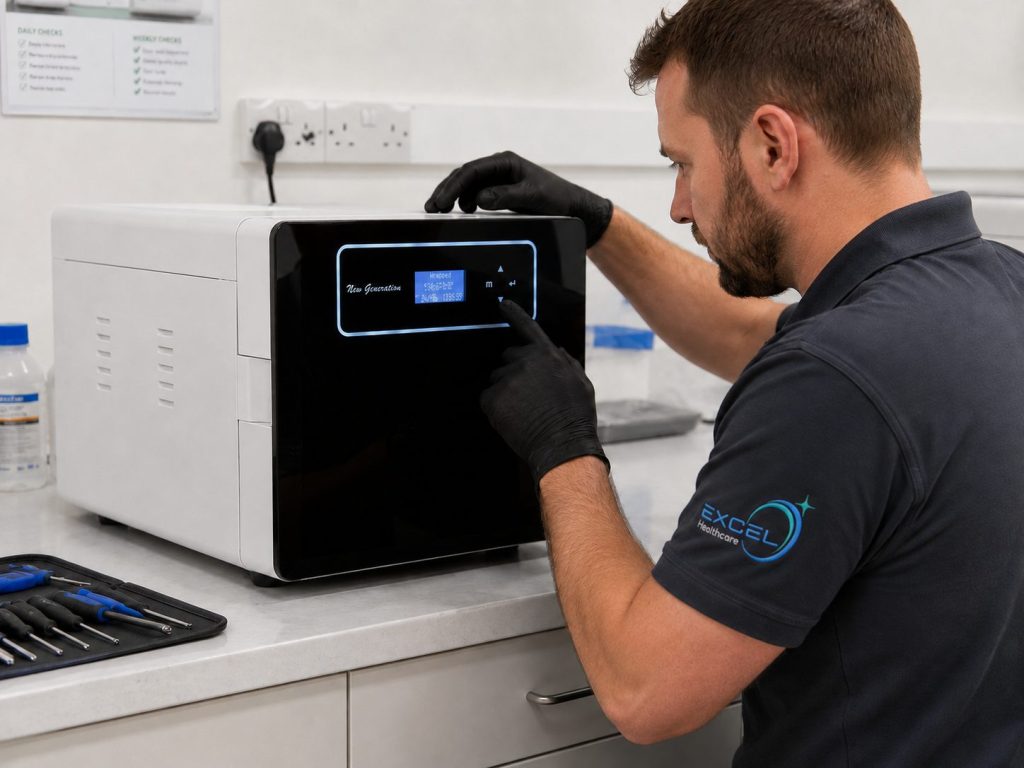
Signs Your Autoclave Needs Servicing
An autoclave is central to the sterilisation process in dental clinics, podiatry practices, veterinary surgeries, tattoo studios and other clinical environments. When it is working correctly, it should complete sterilisation cycles consistently and provide clear records of the time, temperature and pressure achieved.
However, gradual wear, component faults and maintenance issues can affect performance. Recognising the signs that your autoclave needs servicing can help prevent unexpected breakdowns, reduce disruption and protect the reliability of your sterilisation process.
Autoclaves should still be maintained according to the manufacturer’s recommendations, even when no obvious fault is present. The following warning signs may indicate that an additional inspection or service is required.
Sterilisation Cycles Are Taking Longer
A noticeable increase in cycle time can indicate that the autoclave is taking longer to reach the required temperature or pressure.
Possible causes may include:
- Worn door seals
- Heating problems
- Blocked filters or pipework
- Water-quality issues
- Sensor or control faults
Cycle duration can vary according to the selected programme and load, but a consistent unexplained increase should be investigated.
Instruments Are Still Wet After the Cycle
Wrapped instruments should be properly dried before they are removed and stored. If pouches or instruments regularly remain wet after a completed cycle, the drying stage may not be functioning correctly.
Wet loads may be caused by:
- Overloading the chamber
- Incorrect pouch placement
- Poor steam circulation
- A damaged door seal
- Vacuum or drying-system faults
First check that the autoclave has been loaded according to the manufacturer’s instructions. If wet loads continue, arrange for the equipment to be examined.
The Autoclave Displays Repeated Error Messages
An occasional error may be caused by an incorrectly closed door, low water level or unsuitable load. Repeated error codes, however, should not be ignored.
Record the error code and the circumstances in which it appeared. Avoid repeatedly restarting the machine without identifying the cause, as the fault may affect cycle completion or sterilisation performance.
A qualified engineer can use the error information to help diagnose the problem.
The Door Is Difficult to Close or Seal
The autoclave door should close securely without excessive force. Problems with closing, locking or maintaining a seal may indicate wear or damage to the gasket, locking mechanism or door components.
Other signs of a sealing problem can include:
- Steam escaping around the door
- Water leaking during a cycle
- Pressure failing to build
- Vacuum or air-leakage test failures
- Visible cracks or flattening of the seal
Door seals are serviceable components and should be inspected and replaced when required.
Unusual Noises During Operation
Autoclaves make normal operational sounds as pumps, valves and heating systems work through each stage of the cycle. New or unusually loud noises can indicate a developing mechanical issue.
Warning sounds may include:
- Grinding
- Repeated clicking
- High-pitched squealing
- Excessive vibration
- Pumps running for longer than normal
Stop using the autoclave and seek professional advice if the noise is severe or accompanied by leaks, smoke, burning smells or cycle failures.
The Autoclave Struggles to Reach Temperature or Pressure
A sterilisation cycle must operate within validated parameters. If the machine takes too long to reach the required temperature or pressure, repeatedly aborts cycles or records inconsistent readings, it should be inspected.
Possible causes include heating-element faults, steam-generation problems, sensor issues, leaks or scale accumulation.
Do not assume that instruments have been sterilised if the cycle has failed or the required parameters have not been achieved.
Water Is Leaking Around the Machine
Water beneath or around an autoclave should be investigated rather than repeatedly wiped away.
Leaks may come from:
- Door seals
- Water reservoirs
- Drainage connections
- Internal pipes
- Valves
- Condensation systems
Switch off the equipment and follow the manufacturer’s guidance if a significant leak occurs. Continuing to operate a leaking machine could worsen the fault or create an electrical and workplace hazard.
Test Results Are Inconsistent or Unsuccessful
Routine testing helps confirm that an autoclave is performing correctly. Failed or inconsistent test results can indicate problems with air removal, steam penetration, temperature control or chamber performance.
A failed test should be recorded and handled according to the clinic’s procedures and equipment instructions. Instruments from an unsuccessful or questionable cycle should not be treated as sterile.
Testing does not replace servicing. Both form part of an effective maintenance and validation programme.
There Is Visible Scale or Contamination
Mineral deposits, scale and contamination can affect the efficiency and lifespan of an autoclave.
Common causes include:
- Using unsuitable water
- Failing to clean the reservoir
- Inadequate chamber cleaning
- Delayed routine maintenance
- Poor instrument preparation
Only use the water type and cleaning products recommended for the machine. Instruments should also be cleaned before autoclaving, often using an ultrasonic cleaner, so that visible debris is removed before sterilisation.
Cycle Records Show a Change in Performance
Cycle records can reveal gradual changes that may not be immediately noticeable during daily use.
Look for patterns such as:
- Longer heating periods
- Inconsistent temperatures
- Pressure fluctuations
- Repeated failed cycles
- Increasing error messages
- Changes in drying performance
Maintaining clear records makes it easier to identify developing issues and provides useful information for the service engineer.
The Autoclave Is Due for Its Scheduled Service
An autoclave does not need to display a fault before it is serviced. Preventative maintenance allows components to be inspected, calibrated and replaced before they cause a breakdown.
Scheduled servicing may include:
- Inspection of seals and filters
- Calibration checks
- Function testing
- Replacement of service-kit components
- Examination of internal systems
- Review of the machine’s overall condition
Excel Healthcare offers a selection of autoclave service plans designed to help clinics arrange regular servicing and manage ongoing maintenance costs.
Why Delaying an Autoclave Service Can Be Costly
Unexpected autoclave failure can disrupt appointments, delay instrument processing and leave a clinic without enough sterile instruments.
Continuing to use equipment with an unresolved fault may also:
- Cause further component damage
- Increase repair costs
- Produce repeated failed cycles
- Shorten the equipment’s working life
- Create gaps in servicing and maintenance records
Early investigation is usually more practical than waiting for the autoclave to stop working completely.
Conclusion
Repeated error messages, wet loads, leaks, unusual noises and inconsistent cycle results are all signs that an autoclave may need professional attention. Changes in cycle time, temperature, pressure or drying performance should also be investigated.
However, servicing should not be limited to situations where a fault is already visible. Regular preventative maintenance, testing and validation help keep an autoclave operating reliably and reduce the risk of unexpected downtime.
Clinics should follow the manufacturer’s instructions and arrange qualified technical support whenever they are unsure about the safety or performance of their sterilisation equipment.
FAQs
How often should an autoclave be serviced?
Service intervals depend on the model, usage and manufacturer’s instructions. Clinics should follow the recommended maintenance schedule rather than waiting for a fault to appear.
Can I continue using an autoclave after an error message?
Check the operating manual for the specific error. If the error repeats, the cycle fails or the required sterilisation parameters are not reached, stop using the machine and seek technical advice.
Why are my sterilisation pouches wet after autoclaving?
Wet pouches can result from overloading, incorrect placement or a problem with the drying or vacuum system. Review the loading instructions and arrange an inspection if the problem continues.
Does autoclave testing replace servicing?
No. Routine tests monitor performance, while servicing examines, maintains and calibrates the equipment. Both are important parts of autoclave management.
Can regular servicing prevent breakdowns?
Preventative servicing can identify worn components and developing faults before they cause a complete breakdown, although it cannot guarantee that every fault will be avoided.