
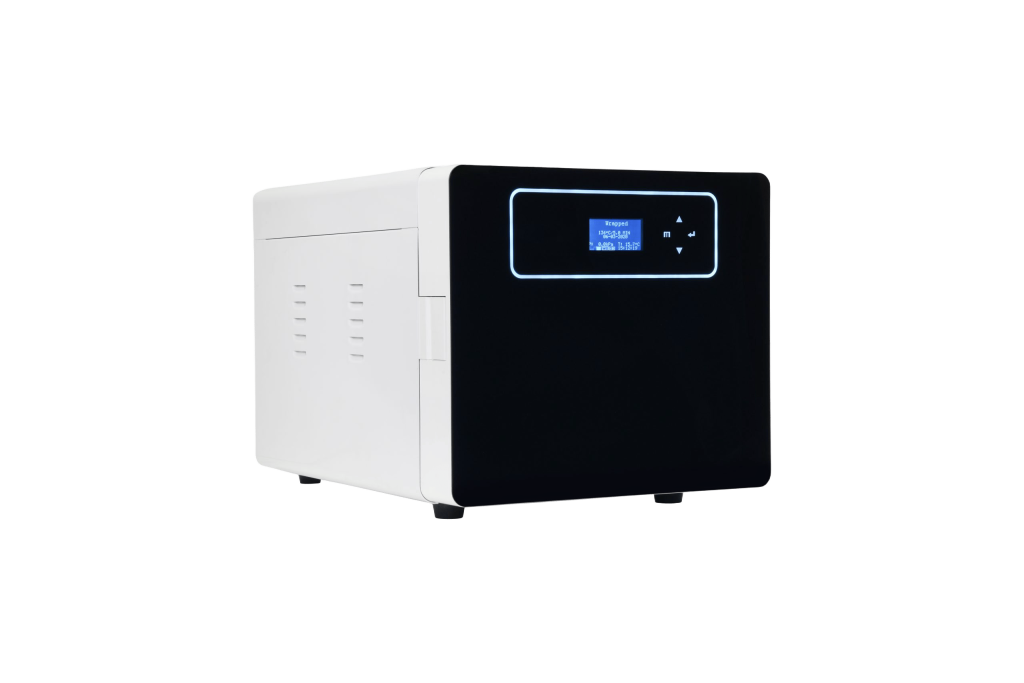
Autoclave Steriliser
An autoclave steriliser uses steam under pressure to sterilise reusable instruments that are compatible with heat and moisture. This guide explains how load type, usable capacity, cycle requirements and ongoing support affect equipment choice for clinics and studios.
Excel Healthcare supplies Class B autoclave sterilisers for professional use. Compare the instrument and load requirements for your practice with the intended use and instructions for the specific model before choosing equipment.
What Is an Autoclave Steriliser?
An autoclave exposes a prepared load to saturated steam at a specified temperature for a defined holding time. Effective processing depends on cleaning first, correct loading, air removal, steam contact and a cycle validated for that load. Steam must reach the surfaces requiring sterilisation; it cannot be assumed to penetrate every hollow instrument or package.
Steam sterilisation is used in dental, podiatry and other professional settings for compatible reusable items. Safe use involves a documented decontamination process, trained operators, appropriate testing, maintenance and cycle records. Buying or operating an autoclave alone does not establish that a practice meets all its obligations.
How Does an Autoclave Steriliser Work?
A Class B cycle uses vacuum stages to remove air before steam exposure and to assist drying afterwards. The exact stages, temperatures, holding times and loading limits depend on the model and programme. Follow the instructions for the steriliser, instruments and any packaging, and check the recorded cycle outcome before releasing a load.
Type B cycles are designed for the load types covered by the small steam steriliser standard, subject to the manufacturer’s specified limits. Type N cycles are for unwrapped solid items; type S cycles are for the loads specified by the steriliser manufacturer. A hinged instrument alone does not determine which type is needed.
Which Autoclave Steriliser Class Do You Need?
Choose the cycle and steriliser around the actual instruments, packaging and load. A Class B model may be appropriate for wrapped or hollow items, but the instrument and steriliser instructions must confirm compatibility. Check whether each proposed cycle covers your load rather than assuming that a class label guarantees suitability.
Excel Healthcare specialises in Class B autoclave sterilisers, and you can view the full range of available models in the main autoclave category.
Autoclave Steriliser Sizes and Capacities
Start with the largest instrument or packaged set, tray dimensions, permitted load weight and number of sets needed between cycles. Chamber litres alone do not show usable capacity or throughput. Also check space, ventilation, electrical and water requirements, drying time and provision for downtime.
Compact models can be useful where space or workload is limited, provided their usable chamber dimensions and approved loads meet the practice’s needs. Compare the Enigma 8 Litre B Autoclave with your instruments and packaged sets; confirm the permitted load and complete cycle time before deciding.
For larger loads, the Eclipse autoclave range is listed with a 22L chamber. The Elite autoclave range currently lists a compact 3L model, so it is not a higher-capacity alternative. Check the current model details and usable load limits rather than selecting by clinic type or chamber volume alone.
Who Needs an Autoclave Steriliser?
The need for on-site sterilisation depends on the procedures performed and the reusable items being processed. Dental handpieces, podiatry instruments, tattoo or piercing equipment and beauty tools must be assessed against their own reprocessing instructions and the applicable professional and local requirements. Do not reprocess items labelled for single use.
Compliance and UK Standards
For small steam sterilisers, ask for the model’s declaration of conformity, intended use, applicable product marking and evidence relating to the claimed BS EN 13060 performance. HTM 01-05 covers decontamination in primary care dental practices in England; it is not a product certificate or a universal rule for every UK clinic or studio. Read the NHS England HTM 01-05 guidance alongside the requirements for your own setting.
Ask Excel Healthcare for the documentation, installation requirements and support arrangements for the model you are considering. Confirm your practice’s decontamination, record-keeping and inspection requirements with the relevant adviser or authority; equipment purchase does not guarantee inspection approval.
Supporting Equipment for Autoclave Sterilisation
Cleaning, inspection and sterilisation are separate parts of instrument reprocessing. Compatible ultrasonic cleaners may assist cleaning, but do not sterilise instruments or replace the required checks. Use self seal sterilisation pouches only with compatible instruments and a cycle approved for the packaged load; follow the pouch instructions for loading, drying, handling and storage.
Select autoclave testing products according to the steriliser instructions and the testing schedule for your setting. Use water treatment devices only where they provide the water quality specified for the model. Tests and water treatment support the process but do not guarantee a satisfactory cycle or replace maintenance and validation.
Refurbished Autoclave Sterilisers
Excel Healthcare also lists refurbished autoclave sterilisers. Before buying, confirm the unit’s condition, service and test records, warranty, available documentation and installation or validation arrangements for your site. A refurbished unit needs the same assessment of load suitability and ongoing support as a new one.
Frequently Asked Questions About Autoclave Sterilisers
What is the difference between an autoclave and a steriliser?
An autoclave is a type of steriliser that uses steam under pressure. The term does not identify a particular cycle class; check the model and the loads its programmes are intended to process.
Do I need a Class B autoclave steriliser?
It depends on the load. Class B cycles can accommodate a range of load types, within the manufacturer’s limits. Class N is restricted to unwrapped solid items, while Class S covers specified loads. Confirm compatibility for hollow, wrapped or complex instruments using both the instrument and steriliser instructions.
How often should an autoclave steriliser be serviced?
Follow the manufacturer’s maintenance and testing schedule and the requirements for your setting. Servicing, validation, pressure-system examination and routine user checks are distinct activities. For dental practices in England, CQC’s decontamination equipment guidance also explains validation and cycle-record requirements.
Can small clinics use a mini autoclave steriliser?
A compact autoclave may suit a small practice if its approved loads, chamber dimensions and throughput meet the workload. A 3L or 8L capacity and a Class B label alone do not establish suitability or compliance.
How long does an autoclave sterilisation cycle take?
Compare the complete cycle for your intended load, including heating, air removal, steam exposure and drying, plus any cooling or handling time required before use. Published fast-cycle figures may apply only to particular programmes and loads; ask for the model’s instructions and complete timings.
Why Choose Excel Healthcare?
Excel Healthcare supplies new and refurbished autoclave sterilisers and offers UK-based technical support. Ask the team about model documentation, installation, training, servicing and ongoing costs when comparing options.
If you’re unsure which autoclave steriliser is right for your practice, you can speak directly with our team via the contact page for straightforward, expert advice.