
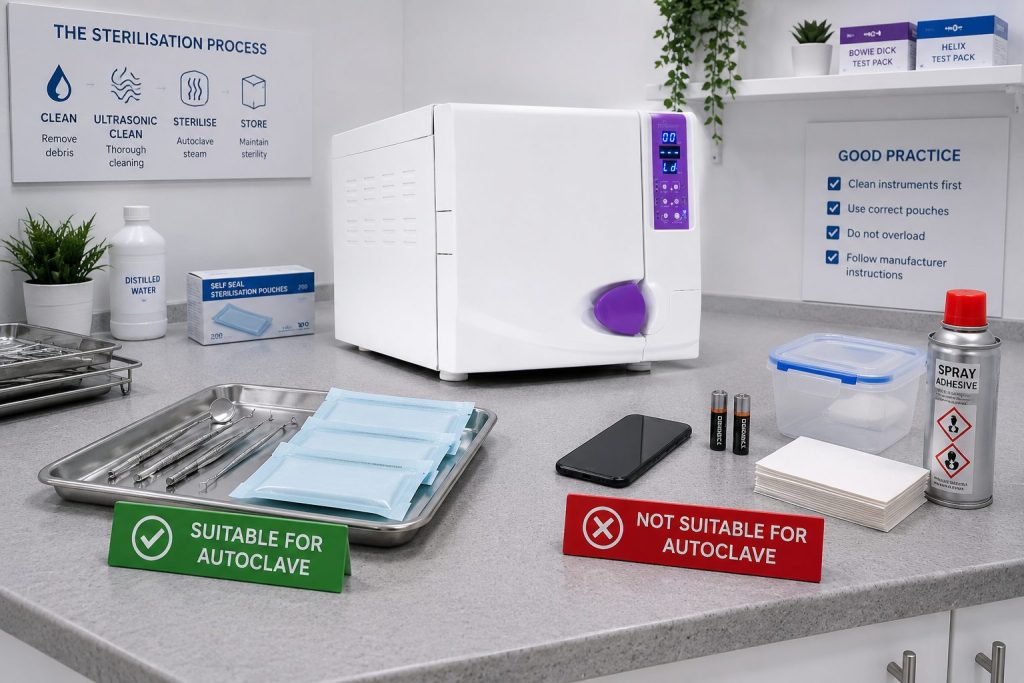
What Cannot Be Sterilised in an Autoclave?
Autoclaves are one of the most effective methods of sterilising reusable instruments used in dental clinics, podiatry practices, veterinary surgeries, beauty clinics and tattoo studios. By using high-pressure saturated steam, an autoclave destroys bacteria, viruses, fungi and bacterial spores, helping to ensure instruments are safe for reuse.
However, not everything can or should be placed inside an autoclave. Using the wrong materials can damage both the item being sterilised and the autoclave itself. Understanding which items are unsuitable for steam sterilisation is an important part of maintaining effective infection control and protecting valuable equipment.
Why Some Items Cannot Be Autoclaved
Steam sterilisation works by exposing instruments to high temperatures, pressure and moisture. While many stainless steel medical instruments are designed for these conditions, other materials can melt, crack, corrode or become unsafe.
Before placing any item into an autoclave, always check the manufacturer’s instructions to confirm it is suitable for steam sterilisation.
Heat-Sensitive Plastics
One of the most common mistakes is placing ordinary plastic items into an autoclave.
Many plastics will:
- Melt
- Warp
- Crack
- Lose their shape
Only plastics specifically labelled as autoclavable should be processed in an autoclave.
Electronic Equipment
Electronic devices should never be placed in an autoclave unless the manufacturer specifically confirms they are designed for steam sterilisation.
Examples include:
- Battery-powered instruments
- Electronic measuring devices
- Chargers
- Mobile phones
- Tablets
- Electronic sensors
The combination of heat, pressure and moisture can permanently damage electronic components.
Sealed Containers
Completely sealed bottles, jars and containers should not be placed in an autoclave.
Pressure can build up during the sterilisation cycle, increasing the risk of containers breaking or bursting.
If liquids need to be sterilised, they should only be processed using appropriate containers and validated sterilisation cycles.
Oils, Waxes and Powders
Steam cannot effectively penetrate oils, waxes or dry powders.
These materials require alternative sterilisation methods and should not normally be processed in a standard steam autoclave.
Flammable or Volatile Materials
Items containing alcohol, solvents or other flammable chemicals should never be placed inside an autoclave.
Heating these substances under pressure can create serious safety risks and may damage the equipment.
Ordinary Paper and Cardboard
Standard paper, cardboard and packaging materials are not designed for steam sterilisation.
Instead, instruments should be packaged using medical-grade sterilisation pouches or wraps specifically designed for autoclaves.
Our range of self-seal sterilisation pouches helps maintain sterility after the sterilisation cycle has been completed.
Damaged or Corroded Instruments
Although stainless steel instruments are generally suitable for autoclaving, damaged instruments should not continue to be used simply because they can be sterilised.
Instruments with:
- Heavy corrosion
- Cracks
- Loose joints
- Damaged surfaces
May no longer clean effectively and could compromise both performance and infection control.
Disposable Items
Not every disposable item is designed to withstand steam sterilisation.
Disposable gloves, face masks, paper products and many single-use plastic items should be disposed of after use rather than placed in an autoclave.
Always follow the manufacturer’s recommendations.
What Should Be Sterilised in an Autoclave?
Autoclaves are designed for reusable instruments that are manufactured to withstand repeated steam sterilisation.
These commonly include:
- Dental instruments
- Podiatry instruments
- Veterinary surgical instruments
- Tattoo equipment
- Beauty treatment tools
- Stainless steel instrument trays
Correct cleaning before sterilisation is equally important. Many clinics use ultrasonic cleaners to remove debris before instruments are packaged and sterilised.
Common Mistakes to Avoid
To protect both your instruments and your autoclave, avoid these common mistakes:
- Placing dirty instruments directly into the autoclave
- Using incorrect sterilisation pouches
- Overloading the chamber
- Sterilising materials that are not heat resistant
- Ignoring manufacturer instructions
- Continuing to use damaged instruments
Following recommended procedures helps improve sterilisation performance and extend the life of your equipment.
Conclusion
Autoclaves are highly effective for sterilising reusable clinical instruments, but they are not suitable for every material. Heat-sensitive plastics, electronic equipment, sealed containers, oils, flammable substances and many disposable products should never be placed inside an autoclave.
Understanding what cannot be sterilised is just as important as knowing what can. By following manufacturer guidance and using the correct cleaning and sterilisation procedures, clinics can protect their equipment, improve infection control and maintain safe working practices.
FAQs
Can all plastics be sterilised in an autoclave?
No. Only plastics specifically designed and labelled as autoclavable should be steam sterilised.
Can electronic dental equipment go into an autoclave?
Only if the manufacturer states it is suitable. Most electronic devices should never be steam sterilised.
Why can’t sealed containers be autoclaved?
Pressure can build up inside sealed containers during the sterilisation cycle, increasing the risk of them breaking or bursting.
Can dirty instruments go straight into an autoclave?
No. Instruments should always be cleaned before sterilisation. Ultrasonic cleaners are commonly used to remove debris before autoclaving.
What packaging should be used in an autoclave?
Medical-grade sterilisation pouches or wraps designed for steam sterilisation should always be used.