
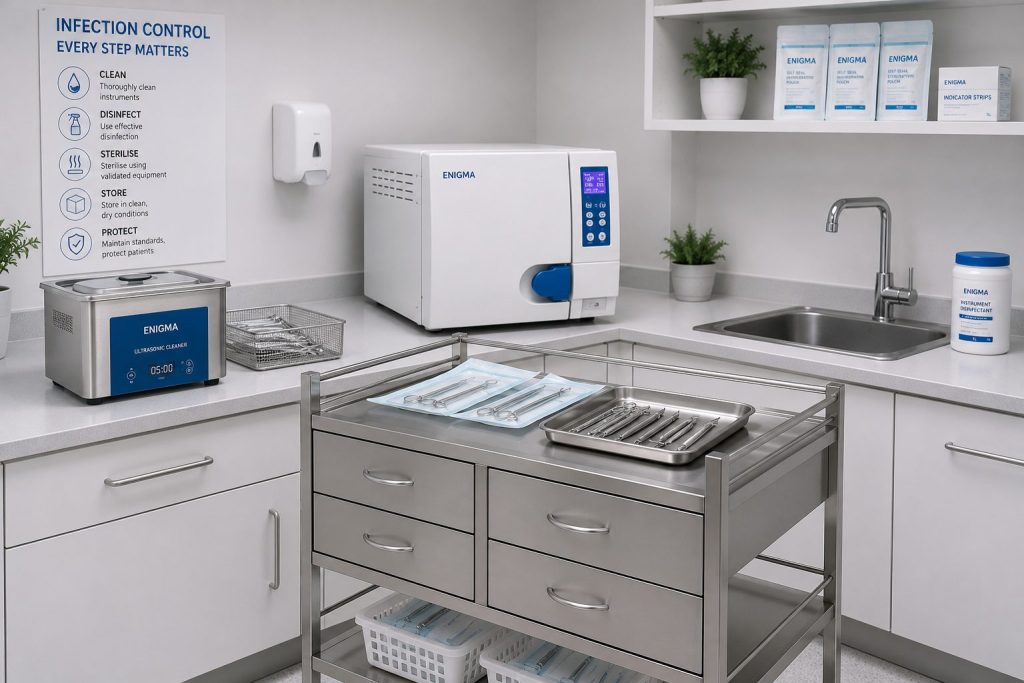
Why Infection Control Is More Important Than Ever in 2026
Infection control has always been a critical part of healthcare and clinical environments, but in 2026 it continues to play an even bigger role in how clinics operate, protect patients and maintain professional standards.
Dental clinics, beauty salons, podiatry practices, veterinary surgeries and tattoo studios are all under increasing pressure to demonstrate high hygiene standards and maintain safe treatment environments. Patients are more aware of cleanliness than ever before, and clinics are expected to follow clear sterilisation and decontamination procedures at every stage of treatment.
As equipment, regulations and patient expectations continue to evolve, effective infection control remains one of the most important investments a clinic can make.
Rising Patient Expectations
Patients today notice far more about a clinic environment than they did a few years ago. Clean treatment rooms, organised equipment and visible sterilisation processes all contribute to trust and confidence.
Many clients actively look for:
- Sealed sterilisation pouches
- Clean treatment areas
- Professional instrument handling
- Modern sterilisation equipment
In highly competitive industries such as dentistry and aesthetics, poor hygiene standards can quickly damage a clinic’s reputation.
Infection Control Is About More Than Just Sterilisation
While autoclaves and ultrasonic cleaners are essential, infection control goes much further than simply sterilising instruments.
A complete infection control process also includes:
- Correct handling of instruments
- Clean-to-dirty workflows
- Surface disinfection
- Proper storage
- Staff training
- Equipment maintenance
Every stage of the process matters. Even properly sterilised instruments can become contaminated if they are handled or stored incorrectly afterwards.
Cross Contamination Risks Remain a Major Concern
Busy clinics often process large numbers of instruments every day. Without organised systems in place, the risk of cross contamination increases significantly.
Common causes include:
- Improper instrument transport
- Cluttered sterilisation areas
- Poor separation of clean and contaminated items
- Incorrect pouch usage
- Inadequate cleaning before sterilisation
Creating structured workflows helps reduce these risks and improves consistency across the clinic.
Modern Clinics Are Investing in Better Sterilisation Equipment
As infection control standards continue to evolve, many clinics are upgrading their sterilisation equipment to improve reliability and efficiency.
Class B autoclaves remain a popular choice because they are suitable for hollow and wrapped instruments commonly used in healthcare and dental environments.
Clinics are also increasingly investing in:
- Ultrasonic cleaners
- Distilled water systems
- Medical trolleys
- Sterilisation consumables
- Instrument organisation systems
Using the right equipment together helps support safer and more efficient daily workflows.
If you are reviewing your current sterilisation setup, our guide to choosing the best autoclave for a dental clinic may also be useful.
Compliance and Documentation Are Becoming More Important
Regulatory expectations continue to increase across healthcare and treatment industries. Clinics are expected to maintain clear sterilisation procedures, service records and validation processes.
Routine maintenance and regular servicing of sterilisation equipment are essential to ensure equipment performs consistently and remains compliant.
Having documented procedures also helps clinics maintain staff consistency and improve accountability.
Staff Workflow and Efficiency Matter Too
Good infection control processes can also improve efficiency. Organised sterilisation rooms and properly structured workflows help reduce delays, improve instrument turnaround times and make daily tasks easier for staff.
Simple improvements such as designated clean and dirty zones, organised storage and mobile transport systems can make a significant difference in busy clinics.
Technology Is Improving Sterilisation Processes
Modern sterilisation equipment is becoming more advanced, with many clinics moving towards:
- Digital cycle monitoring
- Improved vacuum systems
- Faster sterilisation cycles
- Easier validation tracking
- Compact equipment for smaller clinics
These developments help clinics improve both compliance and workflow management.
Conclusion
Infection control remains more important than ever in 2026 because patient expectations, compliance requirements and operational demands continue to increase across healthcare and treatment industries.
Effective sterilisation is no longer just about meeting minimum standards. It is about creating safer environments, improving workflow efficiency and maintaining trust with patients and clients.
Clinics that invest in reliable equipment, structured processes and proper staff training are better positioned to maintain high hygiene standards and support long-term success.
FAQs
Why is infection control important in clinics?
Infection control helps reduce the risk of contamination, protects patients and staff, and supports safe treatment environments.
What equipment helps improve infection control?
Autoclaves, ultrasonic cleaners, sterilisation pouches and medical trolleys all support effective infection control processes.
Why are Class B autoclaves commonly used?
They are suitable for sterilising hollow and wrapped instruments commonly used in dental and healthcare environments.
Can poor workflow increase contamination risks?
Yes, cluttered workspaces and poor separation between clean and contaminated items can increase cross contamination risks.
How often should sterilisation equipment be serviced?
Regular servicing and validation checks are important to ensure equipment performs safely and consistently.