
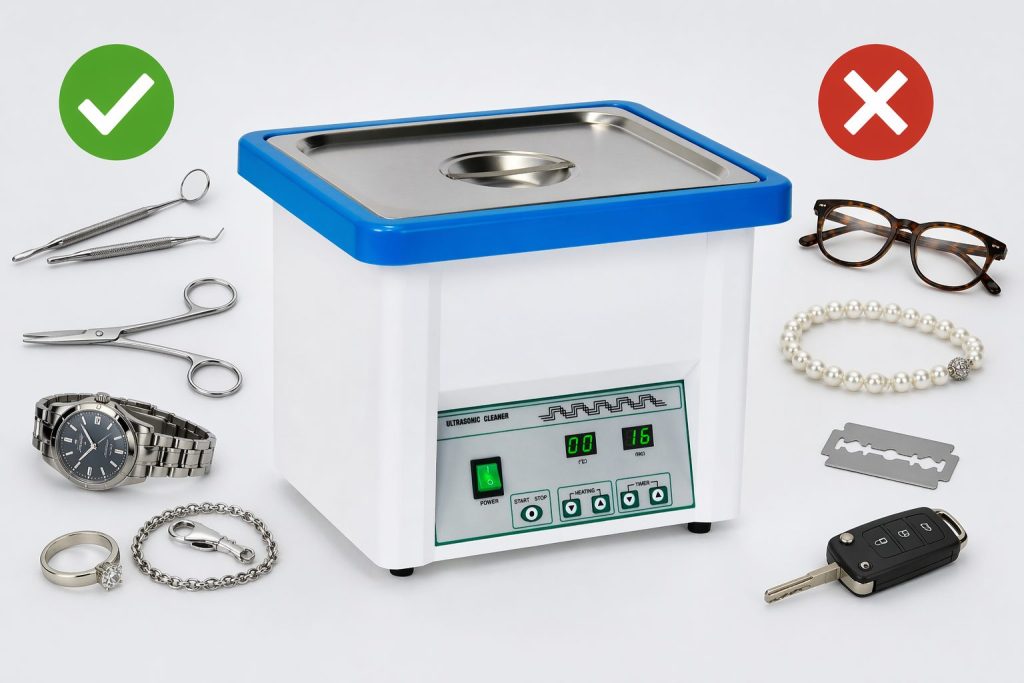
What Can and Can’t Be Cleaned in an Ultrasonic Cleaner?
Ultrasonic cleaners are widely used in clinics, salons, and workshops to remove dirt and debris from instruments. They are fast, effective, and able to clean areas that are difficult to reach by hand.
However, not everything can safely be placed inside an ultrasonic cleaner. Knowing what can and can’t be cleaned is essential to avoid damage to tools and ensure proper hygiene standards are maintained.
What Can Be Cleaned in an Ultrasonic Cleaner?
Ultrasonic cleaners are ideal for cleaning items with small crevices, hinges, or detailed surfaces. They are commonly used across medical, beauty, and industrial environments.
Suitable items include:
Metal instruments
- Surgical tools
- Dental instruments
- Podiatry tools
- Nail scissors and cuticle nippers
Beauty and salon tools
- Tweezers
- Metal nail tools
- Clippers
- Lash and brow tools
Tattoo and piercing equipment
- Grips
- Tubes
- Forceps
Jewellery and small metal items
- Rings
- Chains
- Watches (non-water-sensitive components)
Ultrasonic cleaning works particularly well for these items because it removes debris from areas that are difficult to clean manually.
What Can’t Be Cleaned in an Ultrasonic Cleaner?
While ultrasonic cleaners are versatile, certain materials and items should never be placed inside.
Avoid cleaning:
Porous or absorbent materials
- Wood
- Fabric
- Paper-based items
These materials can absorb liquid and become damaged or contaminated.
Soft or delicate stones
- Opals
- Pearls
- Emeralds
The vibration process can cause cracking or damage.
Electronics (unless specifically designed for it)
- Phones
- Standard electrical components
Water and cleaning solutions can damage internal circuits.
Plastic items not designed for ultrasonic use
Some plastics may warp or degrade when exposed to ultrasonic vibration and heat.
Items with glued components
Ultrasonic cleaning can weaken adhesives, causing parts to separate.
Why It’s Important to Use Ultrasonic Cleaners Correctly
Using an ultrasonic cleaner incorrectly can:
- Damage instruments
- Reduce their lifespan
- Lead to incomplete cleaning
- Affect sterilisation effectiveness
For professional environments, proper cleaning is the first step before sterilisation.
If you’re using an ultrasonic cleaner as part of your workflow, it should always be followed by sterilisation in an autoclave where required.
Ultrasonic Cleaning Is Not Sterilisation
One of the most common misunderstandings is that ultrasonic cleaners sterilise instruments.
They do not.
Ultrasonic cleaners:
- Remove dirt and debris
- Prepare instruments for sterilisation
They do not kill all bacteria or spores, which is why an autoclave is still required for full sterilisation.
If you’re unsure how these work together, this guide explains the difference between cleaning and sterilisation:
👉 /ultrasonic-cleaner-vs-autoclave/
Choosing the Right Ultrasonic Cleaner
The type of ultrasonic cleaner you use can affect cleaning performance. Factors to consider include:
- Tank size
- Power output
- Frequency
- Build quality
For professional use, it’s important to choose equipment designed for clinical or commercial environments. You can explore suitable models on the ultrasonic cleaners section of the Excel Healthcare website.
Common Mistakes to Avoid
Even when cleaning suitable items, mistakes can reduce effectiveness.
Avoid:
- Overloading the tank
- Using the wrong cleaning solution
- Running cycles that are too short
- Placing items directly on the tank base instead of using a basket
Following correct procedures ensures consistent cleaning results.
Frequently Asked Questions
Can ultrasonic cleaners clean medical instruments?
Yes, they are commonly used to clean medical tools before sterilisation.
Can I clean jewellery in an ultrasonic cleaner?
Yes, but avoid delicate stones such as pearls or opals.
Can ultrasonic cleaners damage tools?
Only if unsuitable items are placed inside or incorrect settings are used.
Do ultrasonic cleaners replace autoclaves?
No. They are used before sterilisation, not instead of it.
Final Thoughts
Ultrasonic cleaners are a powerful and efficient way to clean instruments, but they must be used correctly. Knowing what can and can’t be cleaned helps protect your equipment and ensures proper hygiene standards are maintained.
When used as part of a complete cleaning and sterilisation process, ultrasonic cleaners play an important role in keeping tools safe and ready for use.