
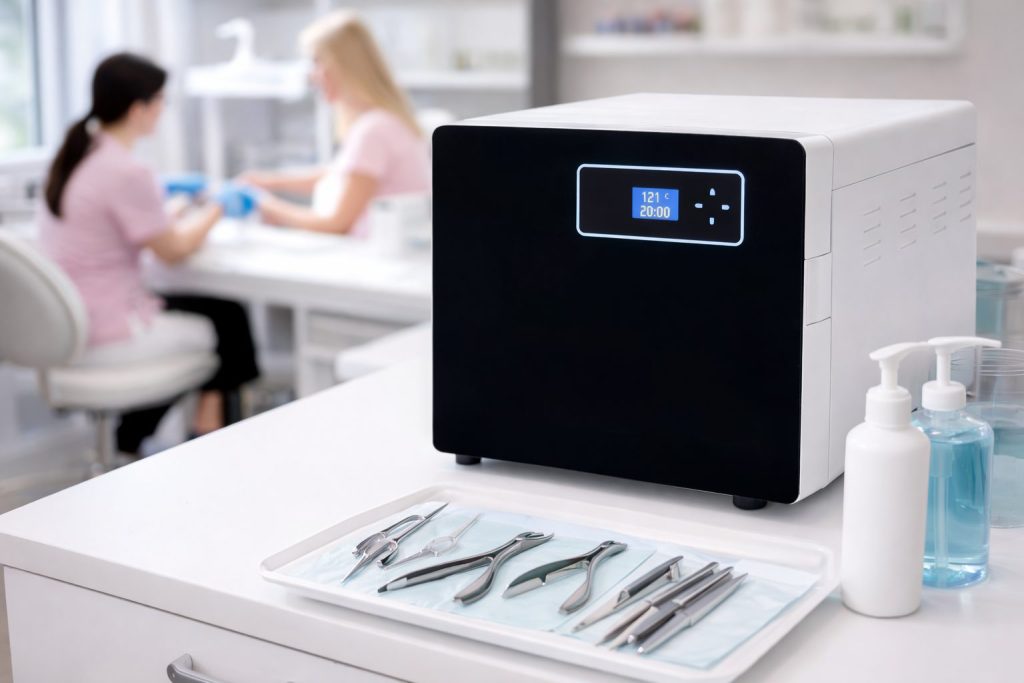
Do Beauty Salons Need an Autoclave for Nail Treatments?
Nail treatments are one of the most common services offered by beauty salons, but they also raise important questions around hygiene and sterilisation. A frequent question from salon owners is whether an autoclave is actually required for nail services, or whether surface disinfection is enough.
This guide explains when a beauty salon autoclave is recommended for nail treatments, what inspectors typically look for, and how salons can protect both clients and their business.
Why Nail Treatments Carry a Higher Hygiene Risk
Many nail treatments involve tools that come into close contact with the skin, and in some cases can cause small cuts or abrasions. Cuticle nippers, scissors, clippers, and metal files can all become contaminated if not cleaned and sterilised correctly between clients.
Even when gloves are worn, tools that are reused without proper sterilisation can pose a cross-contamination risk. This is why nail services are often scrutinised more closely during environmental health inspections.
Is an Autoclave Legally Required for Nail Treatments?
There is no single blanket law that states all beauty salons must have an autoclave. However, local authorities and environmental health officers expect salons to demonstrate effective infection control, particularly when reusable metal tools are used.
In practice, many inspectors strongly recommend steam sterilisation where tools may break the skin. Having an autoclave in place makes it far easier to show that your salon takes hygiene seriously and follows best practice.
For a broader overview of autoclaves in beauty environments, this guide explains what beauty clinics need to know about choosing the right equipment:
When an Autoclave Is Strongly Recommended for Nail Salons
A beauty salon autoclave is particularly advisable if your salon offers:
-
Cuticle cutting or advanced nail treatments
-
Reusable metal nail tools
-
Pedicure services involving callus removal
-
Treatments where tools may cause minor skin breaks
In these cases, surface disinfectants alone may not provide sufficient reassurance, either for inspectors or clients.
Why Class B Autoclaves Are Suitable for Nail Tools
Class B autoclaves use a vacuum-assisted process that allows steam to penetrate hinges, joints, and small cavities in nail tools. This makes them suitable for sterilising instruments such as nippers and scissors, especially when tools are packaged in sterilisation pouches.
For nail salons with limited space, compact Class B autoclaves offer a practical solution without compromising on performance.
How Nail Salons Typically Use an Autoclave
In most salons, an autoclave forms part of a simple workflow:
-
Nail tools are cleaned to remove visible debris
-
Tools are dried and placed into sterilisation pouches
-
Instruments are sterilised using the autoclave
-
Sterile tools are stored safely until needed
This approach supports good hygiene practices and helps salons demonstrate compliance during inspections.
What If a Salon Chooses Not to Use an Autoclave?
Some salons rely on single-use tools or chemical disinfection systems. While these may be acceptable in certain situations, they often involve higher ongoing costs or increased waste.
Without an autoclave, salons may also face more detailed questioning from inspectors, particularly if reusable metal tools are in use. An autoclave provides a clear, defensible sterilisation method that reduces uncertainty.
Client Confidence and Professional Standards
Beyond inspections, many clients are becoming more aware of hygiene standards. Being able to explain that tools are sterilised using an autoclave can build trust and confidence, particularly for new clients or those receiving advanced treatments.
For salons looking to position themselves as professional and safety-focused, having an autoclave can be a strong reassurance point.
Frequently Asked Questions
Do nail salons need an autoclave for basic manicures?
Not always. If only single-use tools are used and there is no risk of skin breakage, an autoclave may not be required.
What about pedicures and cuticle work?
These treatments often involve reusable tools and a higher risk of skin contact, making an autoclave strongly advisable.
Can a small salon use a compact autoclave?
Yes. Compact Class B autoclaves are designed for smaller spaces and lower instrument volumes.
Will an autoclave help with inspections?
Yes. Having an autoclave and a clear sterilisation process can make inspections smoother and reduce follow-up questions.
Final Thoughts
While not every nail treatment legally requires an autoclave, many beauty salons choose to use one to meet best practice standards, protect clients, and avoid inspection concerns. A beauty salon autoclave provides a reliable and professional way to sterilise reusable nail tools and demonstrate a commitment to hygiene.
If your salon offers nail treatments that involve reusable metal instruments, investing in an autoclave can provide long-term peace of mind and support safer working practices.