
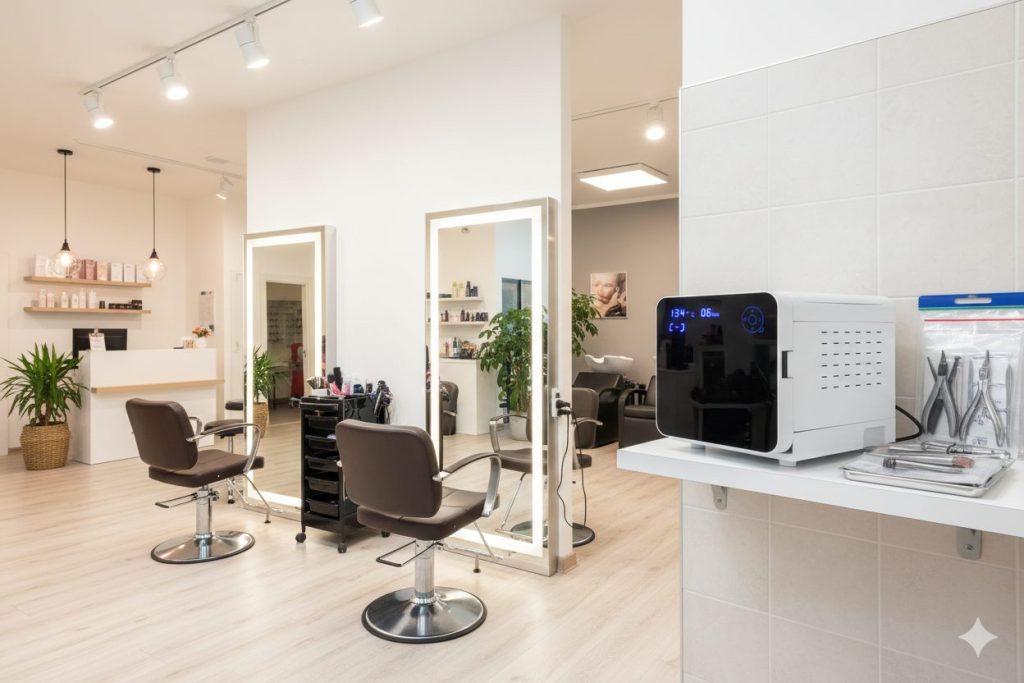
Beauty Salon Autoclave – What Beauty Clinics Need to Know
If you run a beauty salon, aesthetics clinic, or nail studio, you’ve probably asked whether you need an autoclave and, if so, what type is suitable. A beauty salon autoclave plays an important role in infection control, client safety, and inspection readiness, particularly when reusable metal tools are used as part of treatments.
This guide explains when a beauty salon needs an autoclave, what to look for, and how to choose a model that fits your space, workload, and compliance requirements.
Do Beauty Salons Need an Autoclave?
Not every beauty treatment requires an autoclave, but many salons benefit from having one. Local authorities and environmental health officers increasingly expect salons to demonstrate robust infection control procedures, especially where tools come into contact with broken skin.
If your salon uses reusable metal instruments, an autoclave is often the safest and most defensible sterilisation method.
Beauty Treatments That Commonly Require Sterilisation
A beauty salon autoclave is particularly relevant for salons offering treatments that involve reusable tools, including:
-
Nail services using cuticle nippers and scissors
-
Pedicure tools
-
Tweezers used for brow or lash treatments
-
Advanced beauty or aesthetics treatments
-
Any service where tools may break the skin
Surface disinfection alone is not always sufficient for these tools. Steam sterilisation provides a higher level of assurance.
Why Class B Autoclaves Are Recommended for Beauty Salons
Class B autoclaves use a vacuum process that allows steam to penetrate hollow, hinged, and wrapped instruments. This makes them suitable for professional beauty environments where tools vary in shape and design.
A Class B beauty salon autoclave allows you to sterilise tools inside sterilisation pouches, helping them remain sterile until use and supporting safe storage and handling.
Choosing the Right Autoclave Size for a Beauty Salon
Space is often limited in salons, so compact autoclaves are usually the best fit.
Smaller capacity models such as 3 litre and 8 litre autoclaves are popular in beauty clinics because they are compact, quiet, and quick to run. Excel Healthcare supplies several suitable options, including models from the Enigma, Elite, and New Generation autoclave ranges, which are commonly chosen for single-room or low-volume settings.
These compact autoclaves provide full Class B performance without taking up excessive space.
How an Autoclave Fits into a Salon Sterilisation Workflow
A beauty salon autoclave works best as part of a simple, repeatable process:
-
Instruments are cleaned to remove visible debris, often using an ultrasonic cleaner
-
Tools are dried and placed into sterilisation pouches
-
Pouched instruments are sterilised in the autoclave
-
Sterile instruments are stored safely until needed
This approach helps maintain sterility, reduce contamination risk, and demonstrate good practice during inspections.
Storage and Sterilisation Pouches
Once instruments are sterilised, correct storage is essential. Using self-seal sterilisation pouches allows tools to remain protected after the autoclave cycle has finished.
These pouches help prevent recontamination and allow salons to prepare instruments in advance for busy periods, supporting smoother workflows and safer treatments.
Compliance, Inspections and Peace of Mind
Environmental health inspections often focus on how salons clean, sterilise, and store reusable tools. Having a clearly defined sterilisation process supported by a beauty salon autoclave makes it easier to demonstrate good infection control practices.
Keeping service records, test results, and maintenance documentation also helps reassure inspectors and clients alike.
Servicing and Maintenance for Beauty Salon Autoclaves
Like all clinical equipment, autoclaves require regular servicing to remain safe and effective. Annual servicing helps identify wear early, maintain performance, and reduce the risk of unexpected breakdowns.
For salons that rely on daily tool sterilisation, a maintenance plan can be a cost-effective way to keep equipment running reliably and avoid disruption.
Frequently Asked Questions
Do beauty salons legally need an autoclave?
Requirements can vary by treatment and local authority. While not always legally required, autoclaves are often strongly recommended where reusable tools are used on clients.
Can a small beauty salon use a compact autoclave?
Yes. Compact Class B autoclaves are designed specifically for smaller practices and salons with limited space.
Are autoclaves noisy or disruptive in a salon environment?
Modern autoclaves are designed to run quietly and are suitable for use in client-facing environments.
How often does a beauty salon autoclave need servicing?
Most manufacturers recommend annual servicing, alongside routine user checks.
Final Thoughts
A beauty salon autoclave is an investment in safety, professionalism, and long-term peace of mind. Whether you offer nail treatments, aesthetics, or advanced beauty services, having a reliable sterilisation process helps protect clients, staff, and your business reputation.
For nail-focused services, this guide explains whether beauty salons need an autoclave for nail treatments.
Choosing a compact Class B autoclave that suits your space and workload allows you to maintain high standards without overcomplicating your setup. With the right equipment and workflow in place, sterilisation becomes a simple and confident part of daily salon operations.