
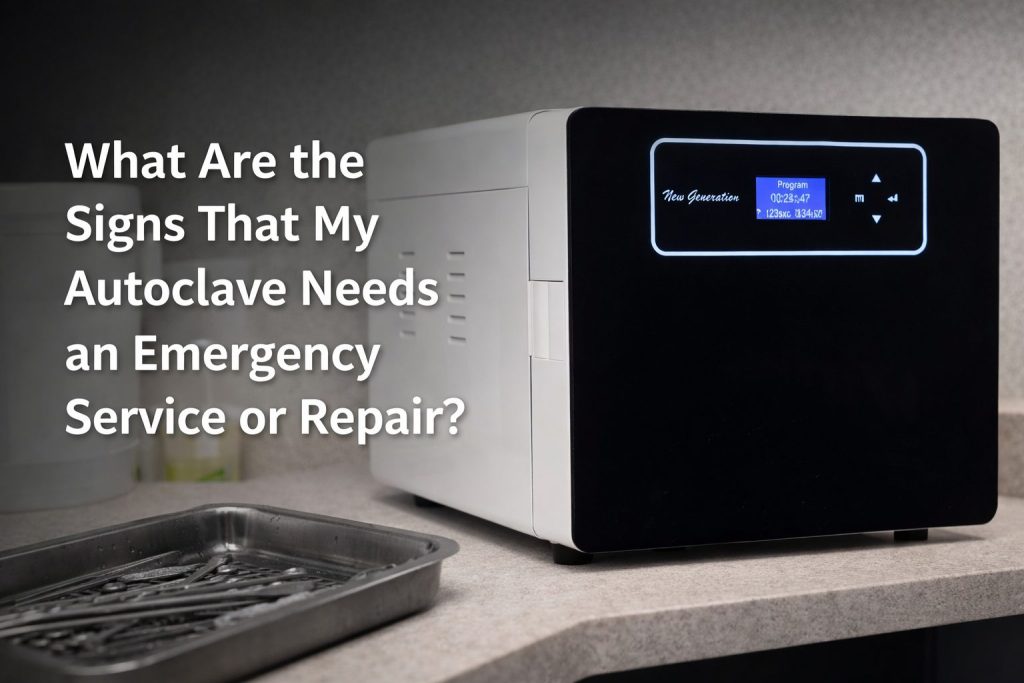
Signs That My Autoclave Needs an Emergency Service or Repair
An autoclave failure rarely happens without warning. In most cases, there are clear signs that something isn’t right long before the autoclave machine stops working completely. Knowing when your autoclave needs emergency service or repair can help you avoid cancelled appointments, failed inspections, and costly downtime.
This guide explains the most common autoclave problems clinics and studios are experiencing in 2026, what they mean, and when it’s time to stop using the machine and arrange professional support.
Why Autoclave Problems Should Never Be Ignored
An autoclave that isn’t performing correctly can compromise instrument sterility, put patients or clients at risk, cause failed inspections, and force temporary closure. Small issues often become expensive faults if they are ignored.
If you notice any of the warning signs below, your autoclave may require urgent attention.
1. Wet Loads After a Cycle Finishes
Wet loads are one of the clearest indicators that something is wrong. If instruments come out damp or dripping, this usually points to a failing door seal, poor vacuum performance, blocked filters, a faulty drying phase, or overloading.
Wet instruments are not sterile, even if the cycle completes successfully. In situations like this, arranging an autoclave emergency callout is strongly recommended before the machine is used again.
2. Temperature or Pressure Fluctuations
Autoclaves rely on stable temperature and pressure to achieve sterilisation. Warning signs include cycles taking longer than usual, fluctuating temperature readings, or inconsistent cycle printouts.
These symptoms are often linked to heating element faults, sensor issues, or steam generator problems. If left unresolved, they can prevent the autoclave from reaching sterilisation standards and may require a professional autoclave repair.
3. Door Seal Leaks or Visible Damage
The door seal is a critical safety and performance component. If you notice steam escaping during a cycle, visible cracks or flattening on the seal, difficulty locking the door, or water pooling around the chamber, the seal may have failed.
Door seal problems can quickly lead to wet loads, failed vacuum tests, and pressure loss. These faults should always be treated as urgent and inspected by a qualified engineer.
4. Repeated Failed Test Cycles
Daily vacuum or Bowie-Dick tests are designed to highlight problems early. Repeated failures often indicate vacuum pump issues, air leaks, or calibration problems.
Once test cycles begin failing consistently, the autoclave should not be relied upon for sterilisation. At this stage, booking an emergency inspection or repair is the safest option.
5. Error Codes You Haven’t Seen Before
Modern autoclaves display error codes to warn of underlying faults. New or recurring codes related to water levels, drainage, pressure build-up, or electrical systems usually mean the issue cannot be resolved by resetting the machine.
If error messages persist, it’s a sign that specialist diagnosis and repair are needed.
6. Unusual Noises, Smells or Steam Release
Grinding noises, loud banging, burning smells, or excessive steam escaping from vents are never normal. These symptoms may indicate pump failure, electrical faults, or pressure control issues and should be addressed immediately.
7. Failed Validation or Inspection Concerns
If your autoclave fails annual validation, produces inconsistent records, or raises concerns during a CQC or local authority inspection, it may need urgent servicing to restore compliance and avoid further action.
When Should I Stop Using My Autoclave?
You should stop using your autoclave immediately if loads are wet, test cycles fail repeatedly, the door seal is damaged, temperature or pressure readings are unstable, or safety warnings continue to appear.
Continuing to use a faulty autoclave risks invalid sterilisation records and serious compliance issues.
How Emergency Autoclave Servicing Helps
An emergency service visit enables engineers to diagnose faults promptly, replace worn components, restore vacuum and drying performance, and verify that the autoclave is operating safely and in compliance.
If your clinic relies heavily on daily sterilisation, arranging an autoclave emergency callout can significantly reduce downtime and disruption.
Why Preventive Maintenance Matters
Many emergency breakdowns can be avoided with regular servicing. An annual maintenance agreement helps identify wear early, maintain consistent performance, reduce unexpected failures, and provide documentation for inspections.
For clinics that want peace of mind, an autoclave service plan is often far more cost-effective than repeated emergency repairs.
Frequently Asked Questions
Can I keep using my autoclave if the cycle completes?
No. A completed cycle does not guarantee sterilisation if loads are wet or tests fail.
Are wet loads always serious?
Yes. Wet instruments should never be used and indicate a fault that needs attention.
How quickly should an autoclave fault be addressed?
Immediately. Delays increase the risk of downtime and compliance issues.
Is repair better than replacement?
In many cases, a timely autoclave repair is far more cost-effective than replacing the unit, especially if it is regularly serviced.
Final Thoughts
Autoclaves rarely fail without warning. Wet loads, failed tests, unusual noises, and persistent error codes are all signs that your machine needs attention.
Acting early protects patients, staff, and your business. If you’re concerned about your autoclave’s performance, speak to Excel Healthcare about emergency callouts, repairs, or ongoing service plans to keep your equipment running safely and reliably.