
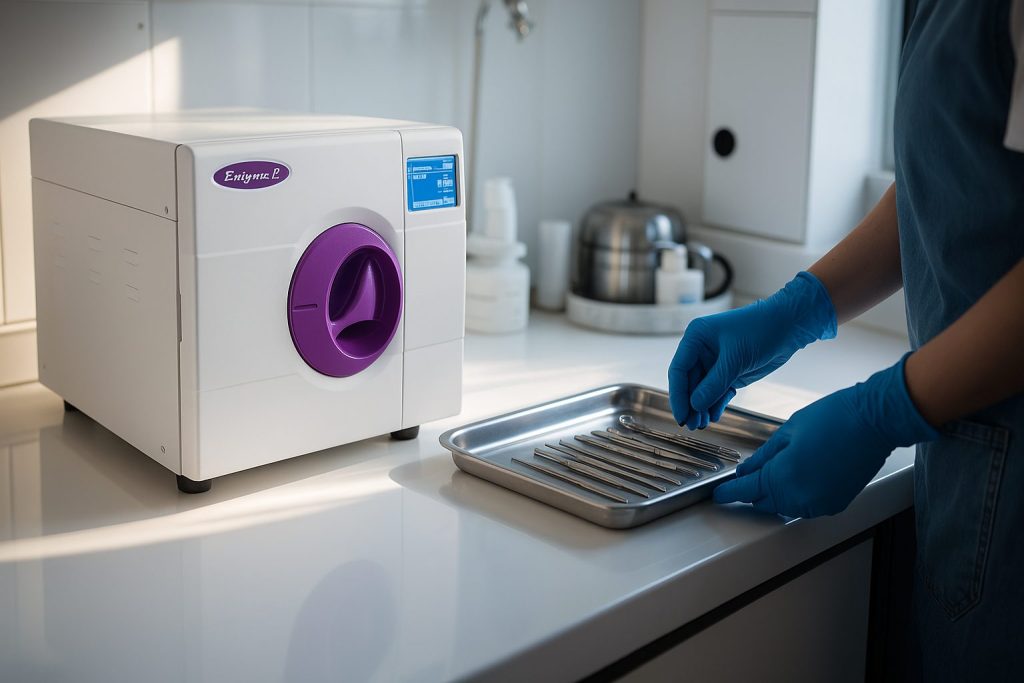
Choosing an Autoclave for Your Piercing Studio
If your piercing studio reuses instruments that require sterilisation, an autoclave and validated cycles suited to those instruments can form part of the decontamination process. The process also depends on effective cleaning, correct loading, staff training, testing and safe handling.
Excel Healthcare supplies autoclaves for professional settings. Check each model’s intended loads, instructions, documentation and support arrangements against your studio’s requirements.
What Is an Autoclave and Why Do Piercing Studios Need One?
An autoclave uses steam at controlled conditions to sterilise suitable, properly prepared instruments. Cleaning and sterilisation are separate stages, and the selected cycle must be validated for the load.
For piercers, this means:
-
Reprocessing compatible reusable forceps and clamps that require sterilisation
-
Reducing infection risks through a documented decontamination process
-
Supporting the equipment and record-keeping arrangements required for the studio
Choose the steriliser and cycle for the instruments and packaging you actually use. The CIEH toolkit distinguishes Type B, manufacturer-defined Type S and Type N load capabilities; it does not establish a single Class B requirement for every piercing studio. Confirm current local conditions with your inspecting authority.
For technical background, see the July 2013 Chartered Institute of Environmental Health Tattooing and Body Piercing Toolkit (PDF). Use it alongside current local requirements and the equipment and instrument manufacturers’ instructions.
For tattoo-specific equipment choices, see our guide to choosing the right tattoo autoclave for your studio.
What to Look for in a Piercing Autoclave
Choosing the right autoclave for piercing depends on your studio size, workload, and the types of tools you use. Here’s what to prioritise:
Class B and Load Compatibility
Type B sterilisers use assisted air removal for suitable hollow, porous or wrapped loads. That capability does not guarantee a successful outcome for every instrument or load. Use only compatible instruments and the cycles specified and validated for them. Piercing needles and cannulas should be sterile, single-use items; do not reprocess them.
Models to compare
-
Enigma 8 Litre B Autoclave → — Check current load capacity, cycle information and installation requirements
-
Elite Autoclaves → — Compare the listed models and their validated load specifications
-
Eclipse Autoclaves → — Review current specifications and support arrangements
✅ Fast Cycle Times
Compare the full cycle and processing time for your intended load, including drying where required. Plan enough instruments and capacity to complete each stage correctly; speed alone does not establish suitability.
✅ Easy Operation
Review the controls and instructions for the models you are considering, including the Enigma 8 Litre B. Staff still need training in correct loading, cycle selection, checks and handling; simple controls do not replace a documented procedure.
✅ Drying Function
Where instruments are wrapped, use a validated cycle and packaging suitable for the load, including the required drying stage. Protect the processed instruments from recontamination and check that packaging remains intact and dry. A drying function alone does not maintain sterility.
✅ Record Keeping
Confirm how the selected model records cycle information and what records your procedure and inspecting authority require. Retain the relevant cycle, testing, validation and maintenance records. Check whether a printer or other recording option is included with the exact model you are buying.
How Often Should You Use an Autoclave?
Reusable instruments that require sterilisation must be cleaned and processed using a suitable validated method before reuse. Single-use needles and cannulas must not be reprocessed. Follow a documented procedure for cleaning, inspection, preparation, loading and the selected sterilisation cycle.
You should also:
-
Perform the routine checks and tests specified for your steriliser, cycles and loads. Ask the manufacturer which tests apply rather than using one generic daily-test instruction for every model.
-
Record and review cycle information as required by the equipment instructions and your procedure.
-
Arrange validation and maintenance with appropriately trained personnel to the manufacturer’s schedule, and confirm any additional local or statutory examination requirements.
Legal and Safety Requirements for Piercing Studios
Registration and licensing arrangements differ across the UK and between local authorities. Check the rules for your practitioner, premises or vehicle and the procedures you provide. Wales has a separate special-procedures scheme covering practitioner licences and approval of premises or vehicles through the local authority.
Ask the supplier for the selected model’s conformity documentation, applicable marking and instructions, including its intended loads and cycle specifications. Product marking and a reference to a standard do not by themselves demonstrate that a studio’s operating process meets every local requirement. Consult your local council’s guidance and, where applicable, the current Welsh special-procedures scheme.
Excel Healthcare – Trusted Supplier of Piercing Autoclaves
Excel Healthcare has been supplying autoclaves to professional studios, salons and clinics for over 40 years. We provide:
-
Autoclave models to compare against your instruments, packaging and intended loads
-
Different capacities and footprints to check against installation requirements
-
UK-based support and servicing
-
Refurbished options for cost-effective setups
Explore our full autoclave range or contact us for expert advice on which model best suits your piercing business.
FAQs About Piercing Autoclaves
Do I legally need an autoclave in my piercing studio?
The requirements depend on your location, procedures and instrument workflow. Reusable instruments that require sterilisation need a compatible, validated process before reuse; pre-sterilised single-use items must not be reused. Confirm the equipment and licensing requirements with your local inspecting authority.
Can I use chemical disinfectants instead of an autoclave?
Disinfection and sterilisation are different processes. Reusable instruments that require sterilisation need an appropriate, validated sterilisation method after cleaning. A Class B autoclave is not the only steriliser type described in the CIEH guidance: suitability depends on the load and the manufacturer’s validated cycles. Do not substitute surface disinfection for a required sterilisation process.
What size autoclave should I choose?
Match usable load space and validated cycles to your instrument dimensions, packaging and workload. Compare the full processing time, installation needs and support arrangements. Review the current specifications for the Enigma 8 Litre B and the Elite range rather than assuming that one capacity is right for most studios.
How often should I service my autoclave?
Follow the manufacturer’s maintenance and validation schedule and any additional requirements confirmed for your equipment and location. Servicing, validation, routine testing and any statutory examinations serve different purposes. Keep the relevant records and use appropriately trained personnel.
Final Thoughts
Choosing an autoclave for piercing involves matching the equipment and validated cycles to the instruments you reuse. Effective cleaning, trained staff, testing, records, maintenance and safe handling are all part of the process. Confirm the model and local requirements before ordering.
Browse autoclaves suitable for piercing → or contact Excel Healthcare for friendly, expert guidance.